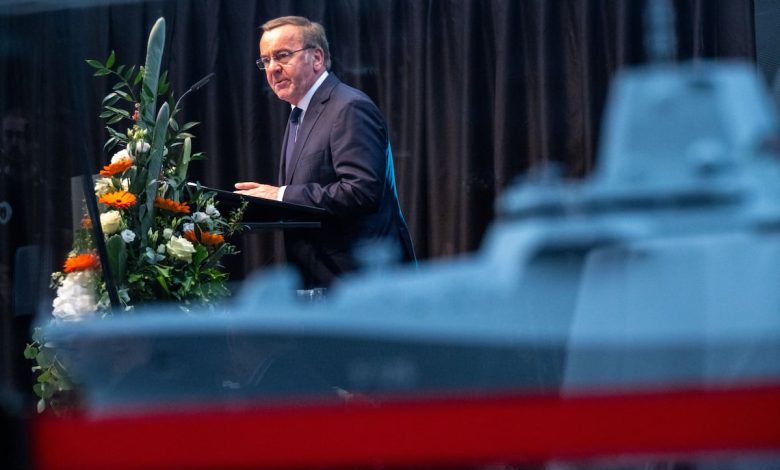
COLOGNE, Germany — The German navy is slated to get four MEKO frigates from local shipyard TKMS as a backup submarine-hunting capability, as the envisioned program of record for F126 specialty ships faces delays.
Defense officials in Berlin portrayed a preliminary contract with the German shipbuilder, approved by lawmakers on Wednesday, as part of “bridge solution” that would ensure the sea service gets urgently needed anti-submarine ships beginning in late 2029, in time to meet NATO commitments.
The plan comes amid mounting questions about a batch of six F126 frigates — previously called MKS-180 — that Germany initially ordered from Dutch shipbuilder Damen in 2020 for a price tag potentially approaching $10 billion.
At the time, the contract award sparked a debate in Germany’s naval-industry circles, with critics arguing the capability was too important to outsource even to a company in the neighboring Netherlands, a close ally.
Damen said it would build the ships in Germany, aiming to have 70% of the contract value go through German vendors.
Construction of the first unit in the class of 10,550-ton frigates started in December 2023, with first steel cutting at the Peene shipyard in Wolgast, Germany, followed by a keel-laying ceremony attended by German Defense Minister Boris Pistorius in June 2024.
According to the German defense ministry, the plan to order four MEKO A-200 DEU ships does not mean the F126 program is altogether sunk.
Officials have been negotiating with NVL, or Naval Vessels Lürssen, as a new main contractor for the program, according to an agency statement.
The firm, newly acquired by defense giant Rheinmetall, describes itself on its website as an “independent, privately owned group of renowned Northern German shipyards and related companies.”
Damen has signaled it would go along with a German lead, though the Dutch company wants to remain “an essential partner,” it said in its annual earnings statement in October 2025.
Rudy Ruitenberg in Paris contributed to this article.
Sebastian Sprenger is associate editor for Europe at Defense News, reporting on the state of the defense market in the region, and on U.S.-Europe cooperation and multi-national investments in defense and global security. Previously he served as managing editor for Defense News. He is based in Cologne, Germany.