A working group of U.S. Army noncommissioned officers is looking at whether some soldiers at large installations and in certain military occupational specialties ought to be able to stay longer at the installation, instead of moving every three years, without hurting their careers.
All the military service branches are examining the frequency of moves of service members, at Pentagon direction, to save money and add stability for troops and families facing a issues when they’re uprooted frequently.
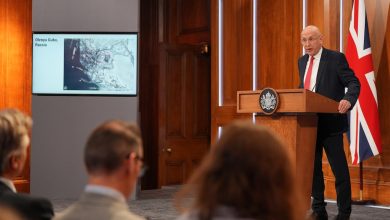
There are certain MOSs “that we do have opportunities and we can do a better job of managing them” in order to move them less frequently, Sergeant Major of the Army Michael Weimer told an Oct. 14 family forum with senior leaders at the annual meeting of the Association of the U.S. Army in Washington.
Weimer said there are not enough soldiers in some MOSs to stretch to fill global requirements.
“We can literally go on our touchscreen dashboards in our office right now. We know the strength of every single MOS in the Army,” he said.
“There’s just some that we don’t have enough to go around where we’re currently trying to grow through some of our Army structure changes,” he said, but “we’re not going to be able to figure that out for everybody. That’s the truth. You deserve to hear the truth.”
The senior leaders, including Weimer, Army Chief of Staff Gen. Randy George and Secretary of the Army Dan Driscoll, addressed frequency of permanent change of station moves when an audience member asked when the Army would “stop moving our soldiers to another base just to do the job that was the same as the last location, versus allowing them to stay where they are while they become experts?”
The needs of soldiers in the Exceptional Family Member Program, dual military couples and high school stabilization for children are among the factors complicating the issue, Weimer said.
“It’s one of the hardest equations we have,” Weimer said. “But we do care and we are trying to figure out how to implement some things to catch it early, so that maybe if there’s an opportunity, we don’t miss it and we can get you longer time at certain installations.”
George said overall, the Army is looking at time away from home, which includes temporary duty and schools, in addition to rotation length.
“I think there’s a lot of things we can do … as far as updating skills and training, to reduce TDY,” he said.
He also pointed to TDY as a budget issue.
“We can spend that money on other things and we can probably get good quality training. It doesn’t fit for everything,” he said.
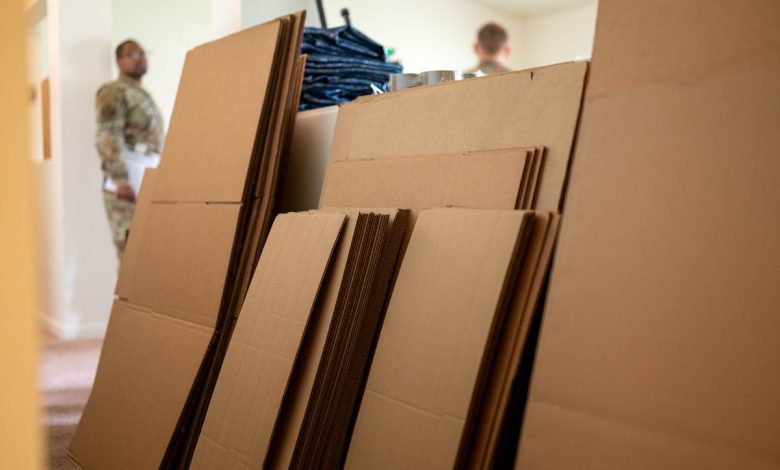
Pentagon officials issued a memo in May ordering the military service branches to develop plans to cut in half the amount of money they spend on moves by fiscal 2030. DOD spends about $5 billion a year on these moves, which include the physical moves of household goods as well as allowances and other entitlements related to moving.
There are a number of things that could be done to reduce moves, George said.
“The challenge is going to be we’re still going to need drill sergeants, we’re still going to need recruiters,” and those assignments are often very good for careers, he said.
“So there’s going to be a certain amount of moving, and I think it’s going to depend on the MOS.
“What’s interesting to me, too, is that when I go out there, it depends on what crowd you’re in, but I go into some places, some people say, ‘I’m ready to move.’“
Driscoll assured the audience that the purpose of this working group is not to use the bureaucracy to sidestep the issue.
Weimer and George “care deeply about these topics, and when they say working group, what that means is a bunch of really passionate leaders who want to try to make your lives better and want to try to make families more stable, where soldiers spend time with their spouses and their kids,” Driscoll said.
Karen has covered military families, quality of life and consumer issues for Military Times for more than 30 years, and is co-author of a chapter on media coverage of military families in the book “A Battle Plan for Supporting Military Families.” She previously worked for newspapers in Guam, Norfolk, Jacksonville, Fla., and Athens, Ga.