‘Those Days are Over”: The US Air Force Admits It Must Completely Change How it Fights Thanks to the Iran and Ukraine Wars

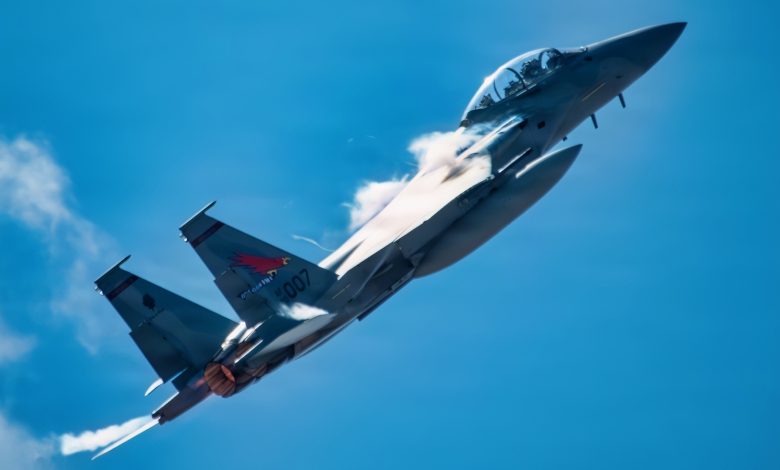
The United States Air Force is creating a new career path to expand the air defense capabilities of America’s flying branch and ensure the safety of U.S. Air Force bases.
Chief of Staff of the Air Force General Kenneth S. Wilsbach announced the project during his State of the Air Force address that kicked off the Air & Space Forces Association’s Air, Space & Cyber Conference.
The Iran and Ukraine Wars Will Change How America Fights
“For decades, American air and space power has often operated from a position of sanctuary. Those days are over,” General Wilsbach said. “We can no longer treat point defense as a side hustle. We must make it a core function of air and space power.”
Clearly, that was a reference to recent combat operations with Iran.
General Wilsbach also said a new weapon system will enter service, though details were scarce.
He did, however, explain that the air defense system would be an amalgamation of both kinetic and non-kinetic measures that will allow airmen to carry out a point-defense air security mission, one that will offer a measure of safety from both high-end threats like cruise missiles and lower-level threats from small, explosive-laden first-person view quadcopter drones as well as the larger, more sophisticated drones utilized in Ukraine.
“Together, these two new initiatives [the career path as well as associated weapon system] will strengthen our defenses, reinforce our ability to generate air and space power under fire and protect our greatest advantage, our airmen and guardians,” General Wilsbach added.
F-16 Fighter in a Elephant Walk. Image Credit: Creative Commons.
New Weapons Incoming
It was not clear exactly what the new weapon system or systems would entail.
However, the U.S. Air Force’s 325th Security Forces Squadron previously used M870 shotguns against simulated UAS threats.
In the future, the Air Force said, it would like to “qualify approximately 210 Airmen to employ the weapon and the SMASH 2000 fire control system.
Once fully implemented, this program will prepare Airmen to safely and effectively neutralize low-altitude, high-speed aerial targets, establishing a critical point-defense capability for the installation.”
The SMASH 2000 fire control system is a smart optic mounted to rifles or carbines that helps shoot down small drones.
The rail-mounted optic system calculates ballistic trajectories to hit drones or other small moving targets and does not allow the weapon to be engaged until a hit is likely, though the system can be manually overridden and fired at will.
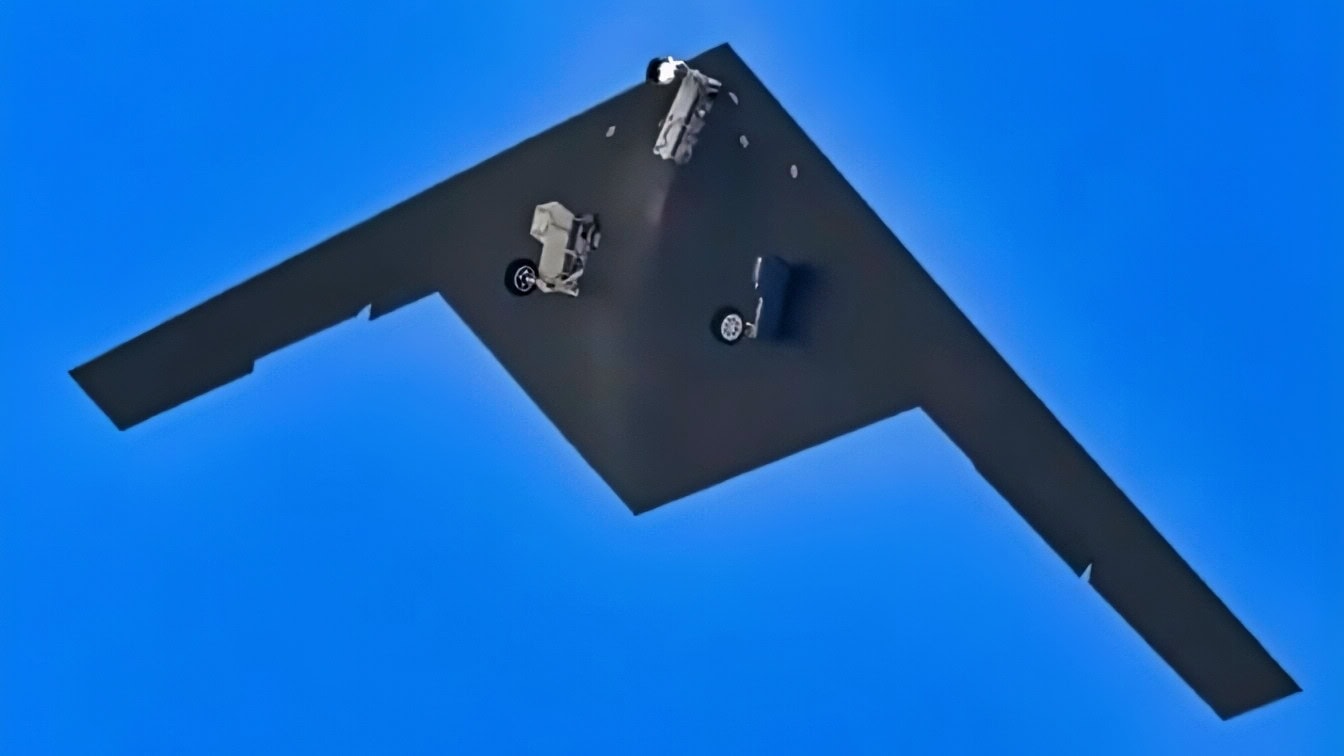
RQ-180 Mini Stealth Drone Like B-21 Raider. Image Credit: X Screenshot.
Air Defense Gaps
While the war in Ukraine first laid out in stark terms how pressing the threat from UAVs is, the air defense push underway within the U.S. Air Force, as well as the other service branches, gained new momentum following the launch of Operation Epic Fury.
The Pentagon’s official list of casualties incurred as a result of the ongoing fighting in the Middle East lists 418 wounded and 7 killed.
The majority of those casualties were the result of Iranian air attacks via missiles and drones on American bases throughout the Middle East and have exposed a surprisingly large hole in American air base safety and counter-UAS preparedness.
The Air Force’s push comes on the heels of a U.S. Marine Corps initiative that aims to push counter-UAS capabilities down to the squad level.
Late last month, the Marine Corps released Ground Combat Element 2040, a roadmap for revamping the land portion of the Marine Air-Ground Task Force, or MAGTAF, which fights with its own organic logistics, aviation, and ground elements.
Though a meaty document, the core of the blueprint is that, in the future, Marines will not only have to survive but thrive in an environment saturated with drone swarms.
“The widespread use of drones underscores the need for effective organic protective measures across the GCE, down to the squad level,” the document explains. “The evolving drone threat presents the most significant risk to ground maneuver, requiring layered active and passive counter-UAS capabilities to retain the initiative.”
General Wilsbach echoed that sentiment. “Protecting the force and generating combat power are inseparable,” the general said. “We need our airmen trained, equipped and ready to fight from the opening moments of a conflict.”
About the Author: Caleb Larson
Caleb Larson is an American multiformat journalist based in Berlin, Germany. His work covers the intersection of conflict and society, focusing on American foreign policy and European security. He has reported from Germany, Russia, and the United States. Most recently, he covered the war in Ukraine, reporting extensively on the war’s shifting battle lines from Donbas and writing on the war’s civilian and humanitarian toll. Previously, he worked as a Defense Reporter for POLITICO Europe. You can follow his latest work on X.