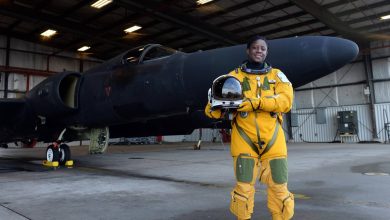
The SR-71 Blackbird Was Originally Going to Be Named Something Different and the Story Seems to Confuse Everyone

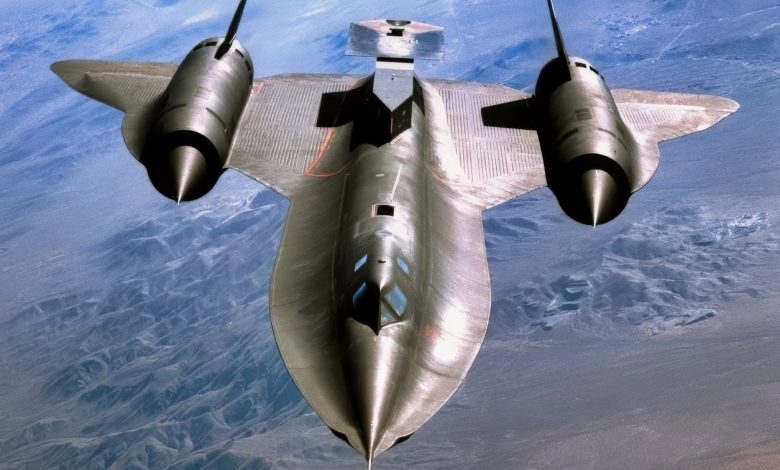
The History Behind the SR-71’s Name: The SR-71 is half a century old, yet it remains one of the fastest air-breathing manned aircraft ever made. This summer marked 50 years since the legendary U.S. spy plane set its world speed record that still hasn’t been broken.
On July 28, 1976, U.S. Air Force pilot Eldon Joersz and reconnaissance systems officer George Morgan flew the Blackbird at 2,193.167 mph. The Fédération Aéronautique Internationale marked the 50th anniversary of the achievement this year, noting that no officially recognized performance has surpassed it.
But the Blackbird’s amazing speed record isn’t the only reason it established itself as a legendary air asset. Even its name has an odd story behind it.
For decades, a story has circulated that the aircraft was actually intended to be known as the RS-71, but that an intervention from President Lyndon B. Johnson changed that. Johnson allegedly reversed the letters while publicly announcing the secret aircraft in 1964, and, according to the story, the Air Force chose to name it the SR-71 rather than correct the president.
But is it really what happened?
The SR-71 Naming Myth
The SR-71 was developed by Lockheed’s secretive Skunk Works division under the notorious aircraft designer Clarence “Kelly” Johnson. Developed from the earlier A-12 and YF-12A aircraft, the Blackbird was designed to perform strategic reconnaissance at altitudes and speeds that made interception extraordinarily difficult.
President Johnson officially revealed the aircraft during a press conference hosted by the State Department on July 24, 1964.
SR-71 Blackbird sitting in a Smithsonian Museum outside of Washington, DC back in 2013. Image Credit: 19FortyFive.
The official transcript of the speech, which was preserved by the Lyndon Baines Johnson Library, shows that the president introduced the aircraft as the SR-71.
“Good afternoon, ladies and gentlemen. I would like to announce the successful development of a major new strategic manned aircraft system, which will be employed by the Strategic Air Command. This system employs the new SR-71 aircraft and provides a long-range, advanced strategic reconnaissance plane for military use, capable of worldwide reconnaissance for military operations,” the transcript reads.
What He Revealed
The president announced the existence of extraordinary capabilities. They were so significant that for fifty more years, no modern aircraft would surpass it.
“The Joint Chiefs of Staff, when reviewing the RS-70, emphasized the importance of the strategic reconnaissance mission. The SR-71 aircraft reconnaissance system is the most advanced in the world. The aircraft will fly at more than three times the speed of sound. It will operate at altitudes in excess of 80,000 feet. It will use the most advanced observation equipment of all kinds in the world. The aircraft will provide the strategic forces of the United States with an outstanding long-range reconnaissance capability. The system will be used during periods of military hostilities and in other situations in which the United States military forces may be confronting foreign military forces,” he said.
Those numbers were no exaggeration, either.
The SR-71 ultimately proved capable of flying above 85,000 feet and of exceeding Mach 3. From 80,000 feet, it was able to survey around 100,000 square miles of the Earth’s surface every hour.
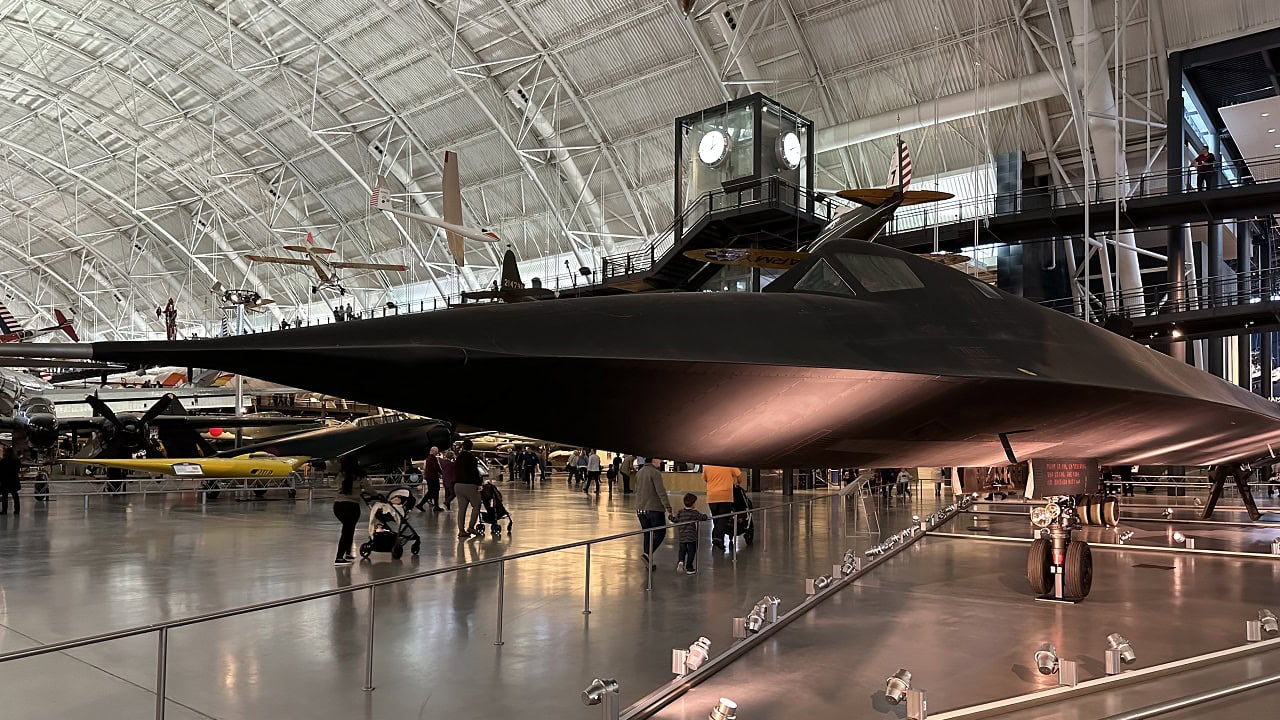
SR-71. SR-71 photo taken at the National Air and Space Museum. Taken by 19FortyFive on 10/1/2022.
It was an enormously valuable asset for the United States, and one that its adversaries could not come close to matching.
So Where Did RS-71 Come From?
The confusion behind the name SR-71 may not have originated with Johnson, but with the transcript given to reporters.
Retired SR-71 pilot Col. Richard Graham later investigated the old story, contacting the LBJ Library in 2000 and obtaining the original text, recordings, and stenographic transcript of the announcement. He found that Johnson correctly stated “SR-71.”
His prepared remarks also said “SR-71.”
But according to Graham’s account, the White House stenographer recorded RS-71 in the transcript handed to journalists, creating the myth that the president got the name wrong. The reporters heard Johnson say one thing, but when they checked the official transcript, they saw a different name.
There was also another potential source of confusion. Immediately before discussing the SR-71, the president referred to the RS-70, which was a proposed reconnaissance version related to the XB-70 Valkyrie, and Graham suggested that hearing “RS-70” may have been why the stenographer recorded the Blackbird as the RS-71.
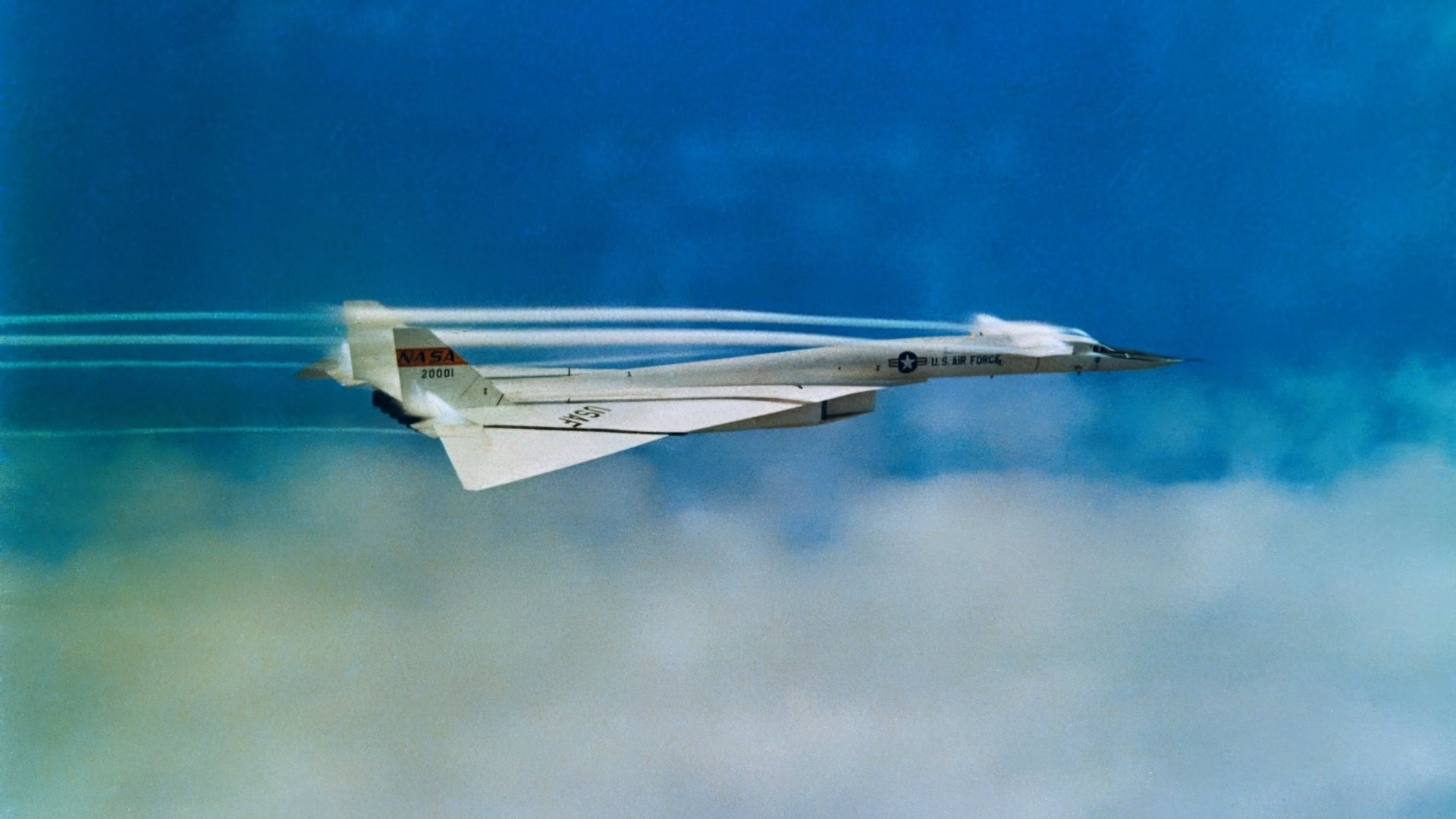
XB-70 US Air Force Bomber Creative Commons Photo

XB-70 photo taken at U.S. Air Force Museum by 19FortyFive in 2025.
There Actually Was An RS-71
Further adding to the confusion, there actually was an RS-71.
According to the official history published by Beale Air Force Base, the then-Chief of Staff of the Air Force, Gen. Curtis LeMay, wanted the aircraft’s designation to be changed from the RS-71 to the SR-71, with “SR” standing for “Strategic Reconnaissance.”
There was an internal debate within the Air Force, and the change was ultimately approved before Johnson delivered his announcement. But that updated designation apparently didn’t reach the media transcripts in time.
So, the famous story contains only one element of truth: the aircraft was called the RS-71, and the designation was later changed to SR-71.
But Johnson didn’t accidentally rename it.
About the Author: Jack Buckby
Jack Buckby is a British researcher and analyst specializing in defense and national security, based in New York. His work focuses on military capability, procurement, and strategic competition, producing and editing analysis for policy and defense audiences. He brings extensive editorial experience, with a career output spanning over 1,000 articles at 19FortyFive, and has previously authored books and papers on extremism and deradicalization.