Russia Built a Titanium Hulled ‘Golden Fish’ Nuclear Submarine That Could Hit 44 Knots That Had 2 Reactors. The Goal Was to Hunt US Navy Aircraft Carriers

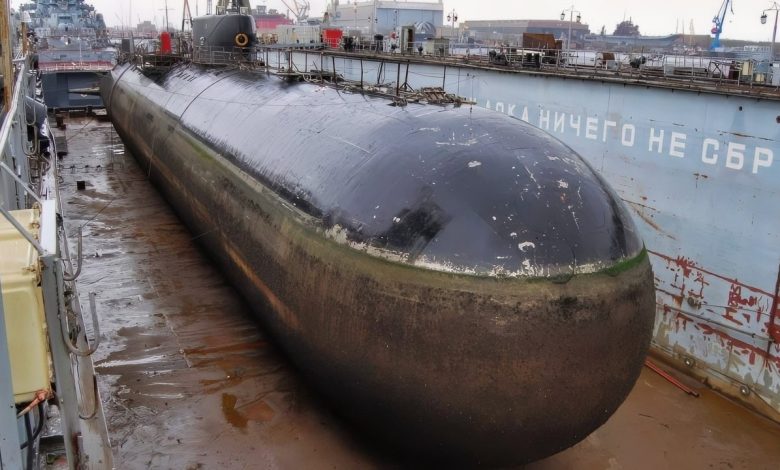
Summary and Key Points: The Soviet Union built one submarine capable of outrunning everything in the ocean, essentially, and then never built another. K-222 — originally K-162 — was the only Project 661 Anchar ever completed, known to NATO as the Papa class. Two VM-5 pressurized-water reactors fed two steam turbines producing roughly 80,000 shaft horsepower, packed into a hull displacing about 7,000 tons submerged. That is the submarine equivalent of bolting an enormous engine into a lightweight experimental airframe, and it worked: on trials the boat reached roughly 44.7 knots underwater, better than 50 miles per hour, a figure still generally credited as the world speed record for a submarine more than half a century later. It was also built almost entirely of titanium, which is why the Soviet Navy called it the Golden Fish, and why there was only ever one.
The K-222 or Papa-Class or Project 661 Submarine: The Name Does Not Matter, The Speed Does for this Submarine
At the height of the Cold War, Soviet engineers built a nuclear submarine capable of outrunning virtually anything beneath the ocean. K-222 (originally designated as K-162) was the only example of the Soviet Project 661 Anchar, known to NATO as the Papa-class. Remarkably, the Papa-class could exceed 44 knots while fully submerged. That’s more than 50 miles per hour underwater—faster than even modern nuclear attack submarines.
During a trial in 1970, K-222 reached roughly 44.7 knots, which is generally still credited as the world speed record for a submarine.
But getting to such high-end speed wasn’t easy—or cheap. Doing so required extensive titanium construction and an incredibly powerful propulsion system.
And naturally, between the titanium and the propulsion system, the K-222 was expensive—so expensive it was nicknamed the “Golden Fish.”
It wasn’t an economical arrangement, and only one was ever built.
A port quarter view of a Soviet Papa class nuclear-powered cruise missile submarine (SSGN) underway.
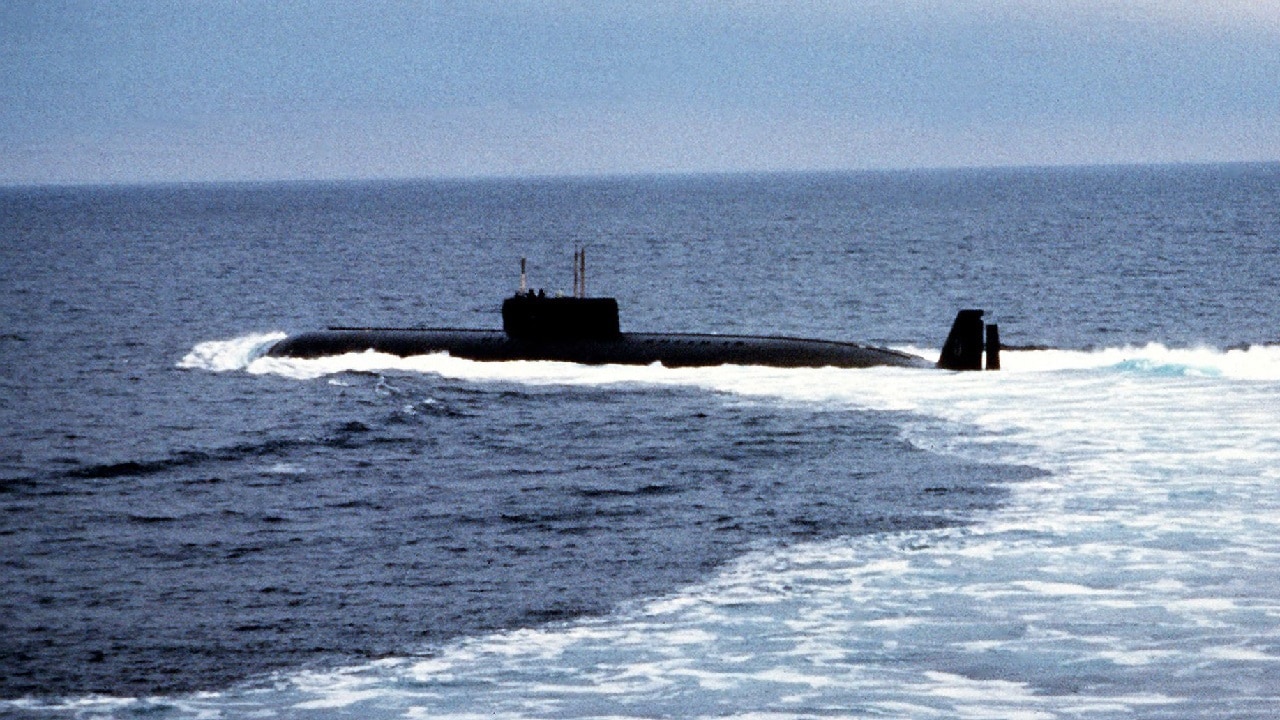
Papa-class Submarine.
Today, half a century later, the K-222 serves as a prime example of Cold War defense philosophies that spared no expense in crafting a high-performance platform.
Chasing Speed
Project 661 emerged in the late 1950s—right around the time aircraft carriers were becoming central to American naval power.
This forced the Soviet Union to confront a fundamental problem. Because US carrier groups could operate far from Soviet territory, and because carrier aircraft dramatically outranged conventional naval guns, the USSR was vulnerable.
And because the USSR couldn’t match the American carrier fleet ship-for-ship, the Soviets needed an alternative solution.
The answer increasingly relied upon anti-ship missiles launched from submarines, aircraft, and surface ships.
K-222 was born of this lineage, conceived as an extraordinarily fast nuclear-powered cruise-missile submarine. K-222’s mission was simple: to get within missile range of carrier groups rapidly, then attack, then reposition—ideally before pursuing forces could catch up.
Speed was necessary because the submarine was being tasked with intercepting a carrier group moving at 30-plus knots.
Titanium Revolution
Ordinary submarine pressure hulls were mostly constructed from steel. Project 661, however, relied on titanium alloy.
This offered multiple advantages.
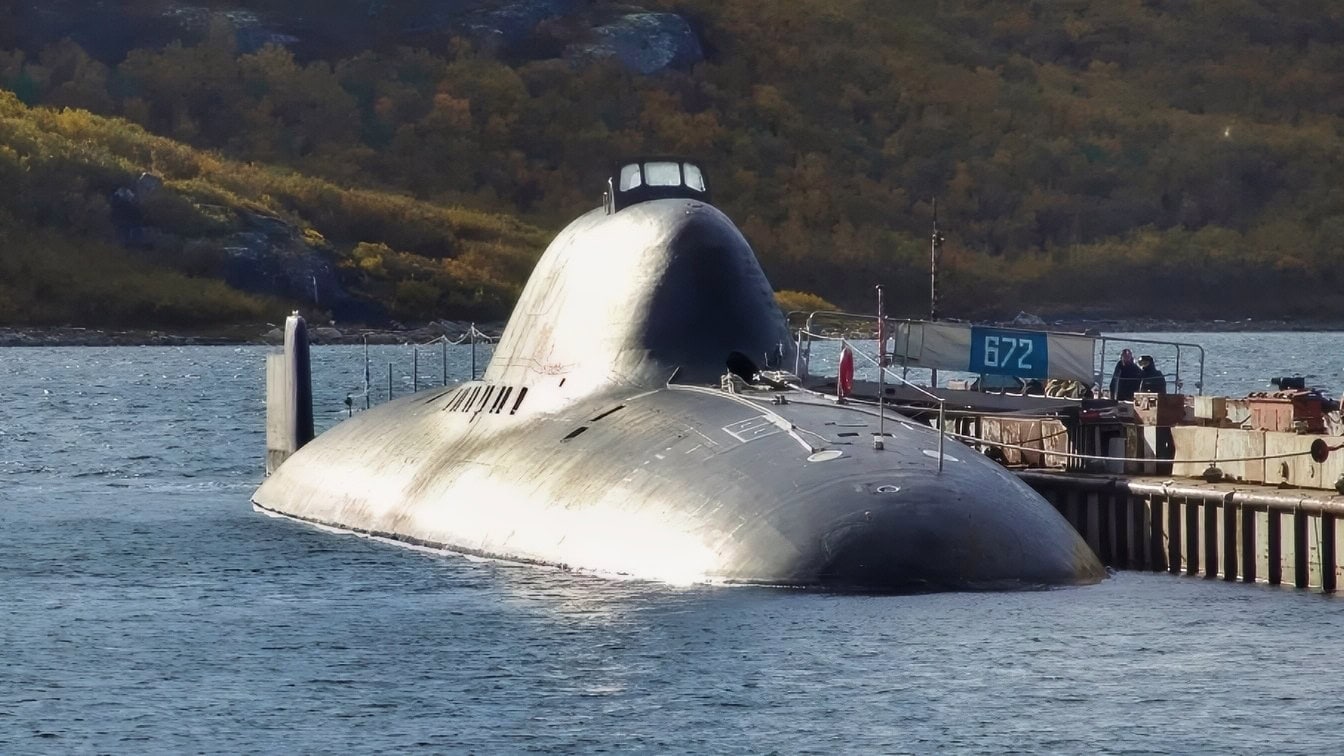
Titanium Russian Submarine Creative Commons
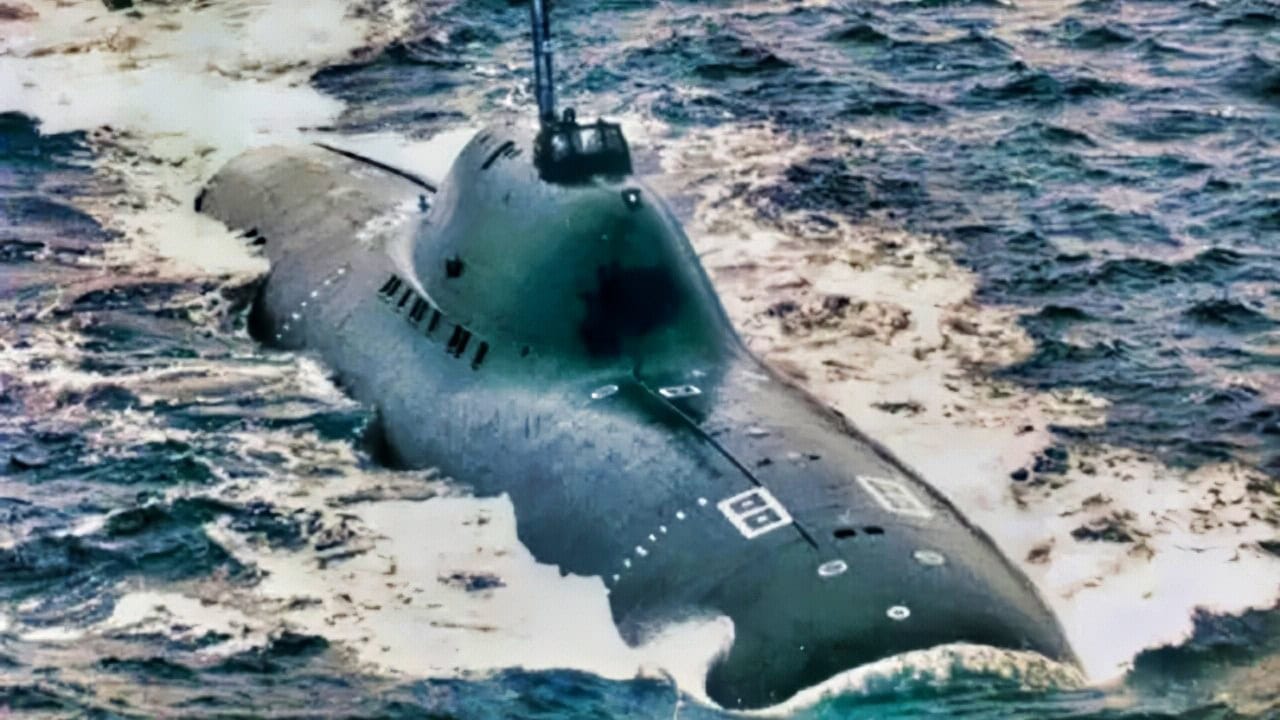
Titanium Submarine from Russia. Creative Commons Image.
The strength-to-weight ratio was excellent, corrosion resistance was improved, and the magnetic signature was reduced relative to steel. And titanium allowed for strength without the same weight penalty.
But titanium made things complicated—and expensive. Soviet industry essentially had to develop new manufacturing expertise for producing huge quantities of titanium alloy, forming massive structural components, precision welding, and quality control. Welding titanium is particularly demanding because heated titanium readily reacts with atmospheric gases.
So the fabrication process had to be carefully controlled. What this all meant was that the Soviet Union wasn’t just building a difficult, expensive submarine; it was building the industrial base required to build it.
The Golden Fish
The Golden Fish nickname was appropriate. K-222’s titanium construction drove costs way, way up. The titanium itself was costly. But so was manufacturing it into an enormous submarine pressure hull.
The project involved extensive experimentation and the use of technologies that had never been used at such scale.
The power plant was also extreme. K-222 used two VM-5 pressurized-water reactors, which fed two steam turbines.
The total propulsion output was roughly 80,000 shaft horsepower.
Now, for a submarine that displaced only 7,000 tons submerged, this output represented enormous power. Twin screws translated that reactor output into extraordinary acceleration and top speed.
The streamlined hull was heavily optimized for high-speed submerged performance. This was essentially the submarine equivalent of installing an enormous engine into a lightweight experimental airframe.
Fast and Loud
K-222 was incredibly fast, but modern submarines survive mostly through stealth.
K-222’s enormous propulsion output and high-speed hydrodynamics produced a lot of noise. So at maximum velocity (the reason the sub was made), the submarine’s stealth advantage basically disappeared.
This created a contradiction, as the speed the submarine relied on to evade pursuers also alerted them to the submarine’s presence.
While only one Papa-class was ever built, the platform wasn’t a failure. It was more of an experimental bridge, advancing Soviet submarine design and production techniques.
Today, the Papa is remembered as a one-off, an incredibly expensive machine that still holds the submarine speed record.
About the Author: Harrison Kass
Harrison Kass is a writer and attorney focused on national security, technology, and political culture. His work has appeared in Tablet, City Journal, The Hill, The Spectator, and The Cipher Brief. He holds a JD from the University of Oregon and a master’s in Global & Joint Program Studies from NYU. More at harrisonkass.com.