100,000-ton US Navy Nuclear Aircraft Carrier USS Abraham Lincoln Looks Like a Rusty Mess After Fighting Iran and That’s No Real Surprise

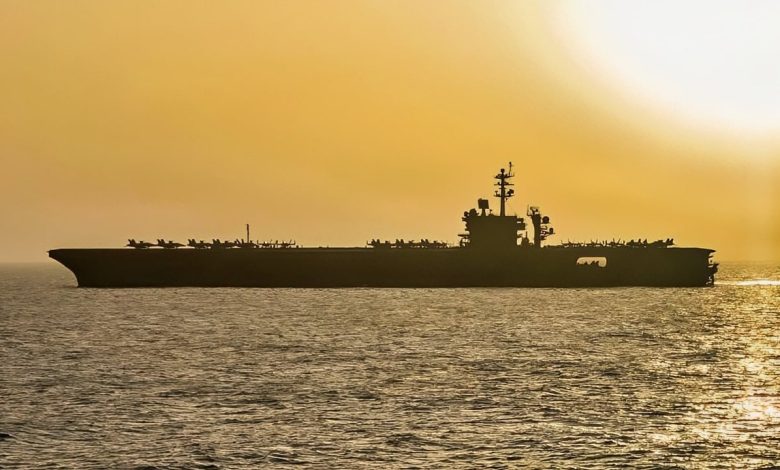
The USS Abraham Lincoln has left the CENTCOM area of responsibility after a record-setting 286-day deployment.
It has now docked in Thailand after completing 264 days (of that 286-day deployment) without a port call.
Aviation Museum of Kentucky USS Abraham Lincoln Carrier Photo. 19FortyFive.com Image.
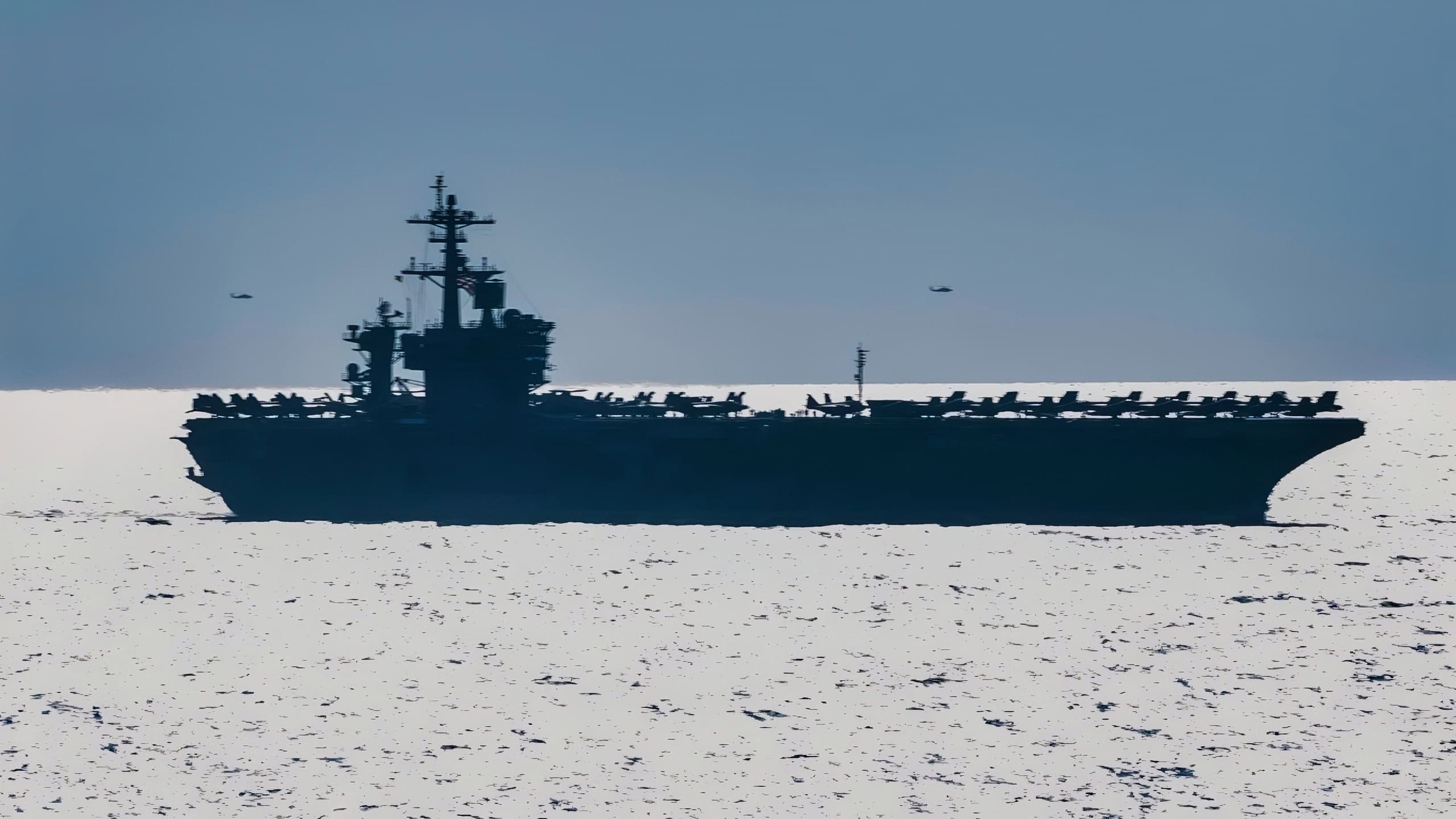
ATLANTIC OCEAN (Aug. 30, 2018) An MH-60S Sea Hawk helicopter assigned to Carrier Air Wing (CVW) 7 flies by the Nimitz-class aircraft carrier USS Abraham Lincoln (CVN 72) during dual-carrier sustainment operations with the Nimitz-class aircraft carrier USS Harry S. Truman (CVN 75). In addition to demonstrating the Navy’s inherent flexibility and scalability, this evolution provides the opportunity to conduct complex, multi-unit training to enhance maritime interoperability and combat readiness; prepare the Navy to protect our homeland; and preserve and promote peace anywhere around the world. (U.S. Navy photo by Mass Communication Specialist 3rd Class Juan Sotolongo/Released)
In other words, the sailors of the carrier have been locked away on a ship for that entire time, under the pressure of war, without so much as a brief respite.
As a result, the crew was starting to crack. In fact, judging from the appearance of the Abraham Lincoln, the ship was starting to crack, too.
A Nightmare Looking Ship
Observers immediately fixated on the rust-covered hull and island of the carrier as it entered the Laem Chabang port on September 2.
Brown and orange streaked across the gray hull.
One was reminded of the appearance of a ship that had seen the crucible of combat in the Pacific Theater of the Second World War, rather than a carrier that had operated against a foe that barely had a navy to speak of.
Alas, the appearance of the Abraham Lincoln, along with the harrowing stories coming from the sailors and their families back in the United States, is enough to make one think that perhaps the Trump administration really did underestimate the Iranians.
After spending less than a week in the Philippines, the crew will trundle back on board their deteriorating ship and make their way to San Diego.
At which point, the carrier will be worked over for months by repair crews, all while the United States Navy’s carrier force remains strained and its sailors are pushed to their limits.
Reports emerged over the summer that food supplies had gotten low, sanitation on the ship had declined, and crew morale had all but evaporated the longer the Abraham Lincoln’s deployment lasted.
Soon, families of the crew in the United States were raising concerns publicly about the mental health of their loved ones on the ship.
Of course, the Navy disputed the reports and downplayed accusations that the crew was essentially being neglected while deployed in a combat zone.
But now that the ship is in a public port, its appearance makes it clear that the sailors were not exaggerating and their families were not lying.
In fact, last month a sailor is believed to have attempted to take his own life.
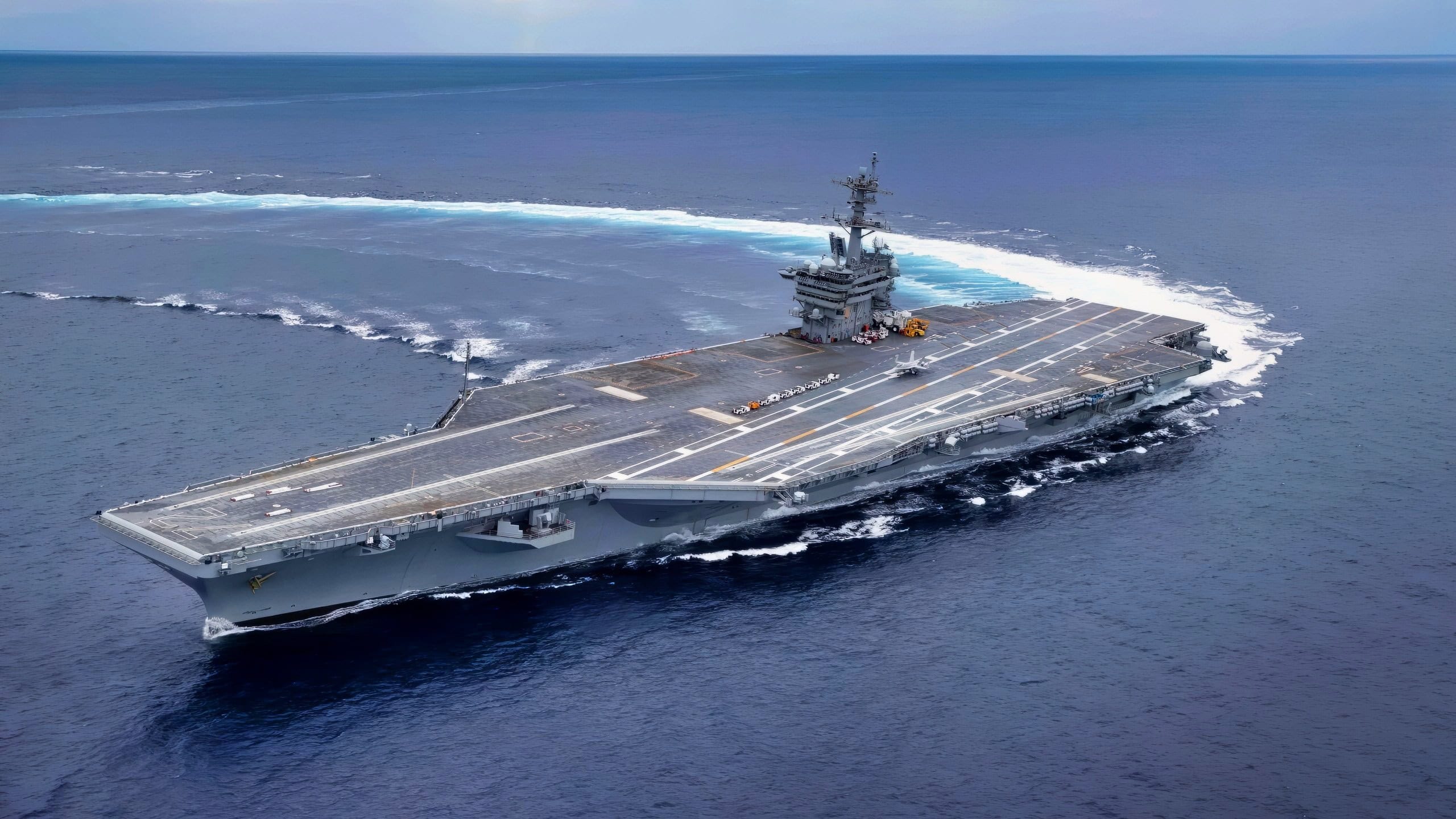
(May 11, 2017) Nimitz-class aircraft carrier USS Abraham Lincoln (CVN 72), conducts high-speed turn drills during sea trials. Abraham Lincoln is underway after successfully completing its mid-life refueling and complex overhaul and will spend several days conducting sea trials, a comprehensive test of many of the ship’s key systems and technologies. (U.S. Navy photo by Mass Communication Specialist 3nd Class Juan A. Cubano/Released)
Crews successfully retrieved the sailor from the sea and sent him home.
The Navy is investigating the incident, and the sailor in question is likely to be reprimanded.
The videos and cameras captured when the Abraham Lincoln entered the Philippines were corroded from constant exposure to saltwater.
Sailors normally fight rust on ships via cleaning, scraping, and repainting.
Yet if a carrier is conducting sustained combat flight operations, as the Lincoln was, the crew focuses more on that than on maintaining the carrier’s outward appearance.
And that makes total sense — until the carrier rolls into a foreign port with many public cameras waiting for it, in the wake of multiple leaked stories about how bad things had gotten for the crew on the ship.
A Disastrous Deployment for This Aircraft Carrier
The USS Abraham Lincoln originally deployed way back in November 2025.
And this isn’t the only US aircraft carrier to have undergone an extended deployment. The new USS Gerald R. Ford was pushed to its operational limits during the Iran War.
Last year, the Dwight D. Eisenhower and Carl Vinson were also taken to their limits.
Now the George Washington has been moved from the Indo-Pacific to replace the Abraham Lincoln, and the George H.W. Bush is there. Soon, Theodore Roosevelt will deploy to the region.
Sailors aboard the Roosevelt are being told to prepare for a deployment lasting more than seven months.
The experiences of both the Gerald R. Ford and the Abraham Lincoln indicate that these longer deployments will become the new norm, especially as recruitment and retention become concerns now that the United States finds itself in another potentially endless war in the Middle East.
Another problem remains unaddressed: why the Navy struggled to replenish its carrier force in the CENTCOM AOR throughout the Iran War.
That reason should be obvious.
The bases the Navy relied upon in the Middle East to sustain its ships could not be reached because Iranian missile and drone coverage was too good over those areas, meaning no expensive US warship could risk docking at those ports for replenishment.
What’s more, the bases themselves–notably the Fifth Fleet headquarters in Bahrain–have been destroyed and degraded, meaning even if the Navy’s warships did try to dock during the war for replenishment, there’d have been no supplies for them.
A Portent of Things to Come
That’s why the carriers struggled throughout their deployment in the Middle East. And the USS Abraham Lincoln is living proof of that.
In the future, carriers deployed to the region will not only have extraordinarily long deployment cycles, but they will also find that replenishment and sustainment are complicated tasks — all as the ships’ crews deal with the stress of continual combat and the strains on their equipment.
Thus, Abraham Lincoln is less a rare tale of things gone wrong over a long time and more an indicator of how bad things are likely to get the longer the Iran War continues.
Especially given the sclerotic nature of America’s ailing naval shipyards.
About the author: Brandon J. Weichert
Brandon J. Weichert is the Senior National Security Editor at 19FortyFive.com. He also manages The Weichert Brief on Substack. Weichert also hosts “National Security Talk” on Rumble. He is the author of four bestselling national security books, the most recent of which is A Disaster of Our Own Making: How the West Lost Ukraine (Encounter Books). Follow him via Twitter/X @WeTheBrandon.