Iran Deployed a $1,500 Mine Designed in 1908 to Do $90,000,000 in Damage to a US Navy Warship and Nearly Sank Her

That Time a $1,500 Iranian Mine Did $90 Million of Damage to a US Navy Warship -The age of unconventional, asymmetrical warfare is upon us and is playing out in the Iran War. Many in the past assumed that the Islamic Republic of Iran was no match for the military might of the United States. Yet the Iranians have consistently demonstrated a remarkable capacity to resist US pressure. Indeed, the Iranians for decades have shown the world their unique capacity to use low-tech, cheap ways to do massively expensive amounts of damage to the US and West.
Background
SOUTH CHINA SEA (Oct 2, 2019) The guided-missile destroyer USS Wayne E. Meyer (DDG 108) celebrates the 10th anniversary of the ship’s commissioning while transiting the South China Sea. Named after Rear Adm. Wayne E. Meyer, the Father of Aegis, (FOA), the crew stands in formation in his namesake. Wayne E. Meyer is deployed to the U.S. 7th Fleet area of operations to support regional stability, reassure partners and allies, and maintain a presence postured to respond to any crisis ranging from humanitarian assistance to contingency operations. (U.S. Navy photo by Mass Communication Specialist 2nd Class Rawad Madanat/Released)
During the 1980s, the Middle East was plagued by warfare. The Iran-Iraq War of the 1980s defined the region’s geopolitics, with a series of knock-on effects. One of those knock-on effects came when a guided-missile frigate belonging to the United States Navy, the USS Samuel B. Roberts (FFG-58), struck an Iranian mine while operating in international waters during the Iran-Iraq War.
What was most disturbing for the Pentagon at the time was how relatively cheap the system that struck the guided-missile frigate was.
Iran’s Sadaf-02, associated with the M-08 family of mines, was based on a Russian design dating back to 1908! That simple sea mine cost around $1,500. The damage to the Samuel B. Roberts exceeded $90 million.
In fact, that particular US Navy Oliver Hazard Perry-class guided-missile frigate was relatively new when it struck the Iranian mine. It had been commissioned only two years earlier, in 1986.
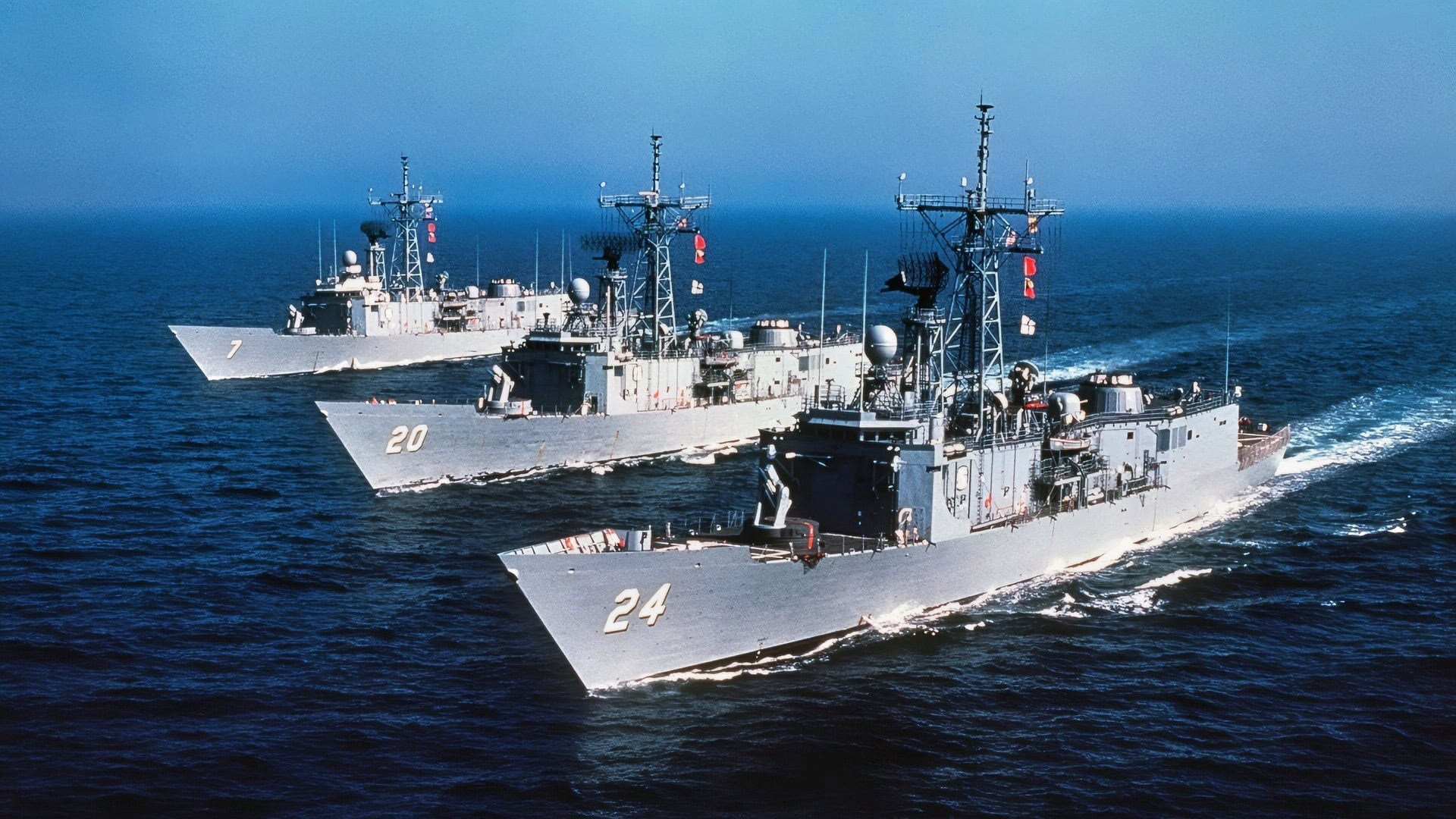
Oliver Hazard Perry-class Creative Commons Image
At that time, because of the Iran-Iraq War, the subsequent “Tanker War” had started, in which the US Navy started escorting reflagged Kuwaiti oil tankers through the Persian Gulf under Operation Earnest Will.
The Iranians and Iraqis had both started targeting shipping through the Gulf as part of their wider war, and the US Navy found that unacceptable, as it was disrupting global shipping.
The Incident
On April 14, the day the Samuel Roberts struck the cheap (and old) Russian-style Iranian mine, the warship was set to rendezvous with a combat stores ship, the USS San Jose. Commander Paul X. Rinn, the commanding officer on the Samuel Roberts, realized quickly that his ship had inadvertently entered a dangerous minefield. The crew went to battle stations while personnel below the waterline were ordered to the top of the ship as a safety precaution.
Rinn did his best to guide the Samuel B. Roberts out of the minefield. It was a hopeless task, though.
The American warship hit a mine that had been positioned deeper than the others and was therefore not visible from the ship. The explosion ripped through the frigate from below, severely damaging the hull and breaking the ship’s keel.
A 21-foot hole opened in her port side, allowing 2,000 tons of seawater into two major compartments on the stricken ship.
Soon, fires broke out on the ship, and three of its four diesel generators were damaged.
Electrical power was temporarily lost onboard as well.
Ten sailors were injured, four of whom were seriously wounded.
The warship appeared to be on the brink of sinking if not for the skillful damage-control effort by the crew of the ship. One man onboard manually started the ship’s remaining diesel generator, thereby restoring sufficient power to get the ship’s pumps working, allowing for the excess water taken in from the blast to be expelled. Meanwhile, sailors fought the fire and controlled the flooding. They employed strong cables to reinforce the portions of the superstructure damaged by the $1,500 mine.
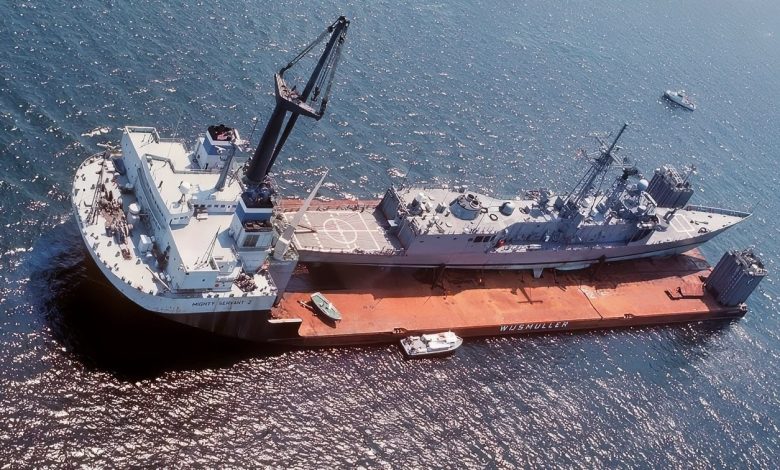
After the ship was saved from sinking, the Navy deployed its heavy-lift vessel, Mighty Servant 2, and transported the damaged warship back to the United States. The Samuel B. Roberts underwent extensive (and expensive, as noted above) repairs.
But she made a full recovery and served until 2015, at which point the Samuel B. Roberts was decommissioned.
The Biggest US Naval Battle Since WWII
Four days after the mine attack on the Samuel B. Roberts, the US Navy began Operation Praying Mantis, targeting Iranian naval facilities and offshore facilities. US forces attacked two Iranian oil platforms and engaged Iranian warships that dared to respond to the attacks by the Americans (who were retaliating for Iran’s mine attack on the Samuel B. Roberts).
In fact, US forces during Operation Praying Mantis sank the Iranian missile boat Joshan along with the frigate Sahand, while seriously damaging the frigate Sabalan.
That battle became the largest surface warfare action since the Second World War for the US Navy, and it is still the only time in which American and enemy warships exchanged surface-to-surface missile fire.
Lessons Learned for Today?
But even in 1988, the Islamic Republic of Iran demonstrated a remarkable capacity to do extraordinary and expensive amounts of damage to the United States military. That damage was wildly disproportionate, too.
A weapon costing $1,500 inflicted tens of millions of dollars of damage, injured multiple sailors, and prompted an expensive US military response. Just as in 1988, the US Navy today is threatened by relatively cheap but effective Iranian mines in the US war with Iran.
Indeed, the Iranians have begun fixating on mining the Strait of Hormuz (SoH), prompting American concerns and counterattacks, likely because Tehran remembers how damaging their mine operations in the 1980s were to US forces.
Iran likely hopes to replicate that experience. Given the number and greater advances made in Iranian mine technology, it is likely that the Islamic Republic can replicate its attack on the USS Samuel B. Roberts–only with greater effect today.
About the Author: Brandon J. Weichert
Brandon J. Weichert is the Senior National Security Editor at 19FortyFive.com. He also manages The Weichert Brief on Substack. Weichert also hosts “National Security Talk” on Rumble. He is the author of four bestselling national security books, the most recent of which is A Disaster of Our Own Making: How the West Lost Ukraine (Encounter Books). Follow him via Twitter/X @WeTheBrandon.