Speaking at the Iranian Embassy in Baghdad on August 20, 2026, Mohammad Bagher-Ghalibaf warned about the consequences of Iran’s collapsing economy. “No matter how much military power we have, if people are hungry and we do not have financial circulation and economic growth, we will not endure,” he said.
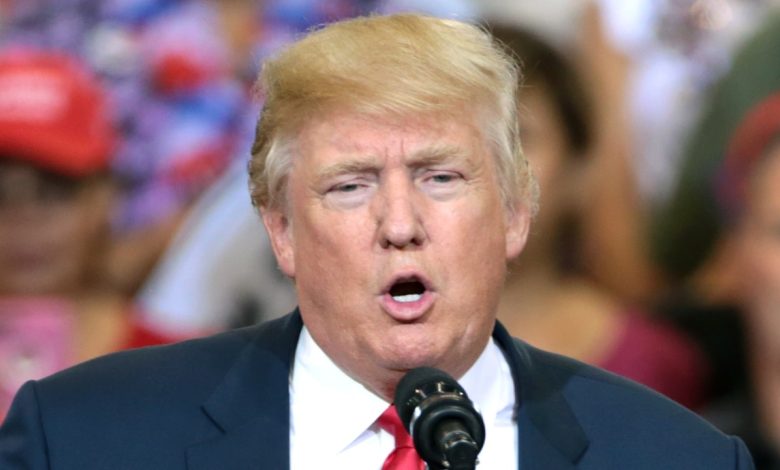
Four days later, U.S. Treasury Secretary Scott Bessent outlined a policy he and President Donald Trump likened to an “economic D-Day.” “We are launching an economic onslaught against Iran’s financial connections around the globe. Our objective is to sever every economic lifeline that sustains this tyrannical regime until Tehran stands alone,” Bessent explained.
Iran Faces a Crisis: What History Teaches
Iranians are worried. Ordinary Iranians are no strangers to sanctions, a shaky currency, or deprivation, but what they face now is qualitatively different.
The Islamic Revolution occurred at a time of rapid economic growth. Ayatollah Ruhollah Khomeini rallied the masses who felt left behind by Iran’s rapid industrialization and modernization. The Islamic Republic faced a double whammy when Khomeini won: Much of the foreign investment dried up almost overnight. Then, in September 1980, Iraq invaded Iran. Iraqi President Saddam Hussein expected a lightning victory, but the conflict quickly morphed into something akin to World War I with SCUD missiles. The war—and missile attacks on Iranian cities that followed—led gross domestic product to crash more than 21 percent in the first year. By the end of the war, per capita income was just over half of what it was before the Revolution. The regime resorted to food rationing amidst shortages. Iranians went hungry, but they did not starve.
For most Iranians, those were the darkest days in living memory. Subsequent sanctions never caused deprivation to the same scale, though they did blunt the hope Iranians had that after Khomeini’s “chalice of poison” ceasefire, the Iranian economy would recover.
While the war froze and the economy stabilized after Iran’s initial counterattack, U.S. sanctions blunted investment. Following attacks by Iran’s Lebanese proxies on American diplomats and U.S. Marine peacekeepers, President Ronald Reagan formally designated Iran to be a state sponsor of terror on January 19, 1984, a status that mandatory sanctions accompany.
Until the twilight of his term, President Bill Clinton took the toughest stance against the Islamic Revolution, issuing executive orders twice in 1995 and once in 1997 to limit trade with and investment in Iran. In 1996, he made the Iran-Libya Sanctions Act a pillar of his policy despite raising the hackles of Europeans over the sanctions’ extraterritoriality. What Trump does today has precedent in Clinton’s actions.
President George W. Bush secretly negotiated with Iran through National Security Council official Zalmay Khalilzad and President Barack Obama signed a nuclear deal greased with tens of billions of dollars of sanctions relief and unfrozen assets. President Barack Obama even lifted sanctions on issues not covered by the 2015 Joint Comprehensive Plan of Action.
During his first term, Trump embraced “maximum pressure.” In hindsight, there are two possibilities as to the severity of his campaign. If it was truly “maximum” then there would be nothing new in the “Economic D-Day” provisions. Alternately, if the Economic D-Day is more robust, then “maximum pressure” was not all that it was sold to be.
Iran Faces Dark Days
Either way, Ghalibaf is right: The Islamic Republic now faces an economic crisis.
The immediate precedent to the December 2025-January 2026 violence in Iran was the collapse of Iran’s Ayandeh bank from which top regime officials were taking out bad loans with no intention of repayment, followed by a strike in the Tehran bazaar, the financial lungs of Iranian society. As bad as things were then, they are exponentially worse today, with much of Iran’s industrial might bombed and its ports hampered. Even if Iran does export oil, it must do so at such steep discounts that it receives only pennies on the dollar. Nor, with the regime ideologues paramount, does it appear there is any hope in the future.
But is Ghalibaf right that Iranians might starve?
Unfortunately, yes. Between 1917 and 1919, the disruptions of World War I—even though Persia was not a direct combatant—combined with the ravages of the Spanish flu led to a famine that killed up to two million Iranians.
Famine may not be imminent in Iran, and it may be wholly avoidable; the danger is that it may be intentional, not by the United States but by the Iranian leadership itself. When Ghalibaf warns of hunger, he himself faces no danger. While journalists portray him by his title—parliament speaker—and the Trump administration views him as their negotiator and interlocutor, Iranians know him as perhaps the most corrupt man in Iran now that the late President Ali Akbar Hashemi Rafsanjani died. Ghalibaf is likely worth hundreds of millions of dollars; he faces no threat of going hungry.
During famines, rulers seldom suffer the fates of their public. Joseph Stalin ensured the Red Army did not suffer during the Holodomor, the deliberate famine Stalin precipitated in Ukraine in 1932-1933 to purge and punish Ukrainians. In the 1990s, Saddam Hussein mastered the art of hunger as a propaganda tool. He deliberately promoted the notion that U.S. sanctions caused hundreds of thousands of Iraqi children to die while he simultaneously exported donated baby formula. In North Korea, too, the Kim dynasty lived large and Kim Il-sung and Kim Jong-il ensured their army had more food than ordinary North Koreans did, as they sought to leverage hunger into aid and concessions.
The Iranian regime has been far more agile than the United States and Israel at shaping public opinion, hence the number of commentators who say Iran won the war, even as its chief negotiator warns of hunger. The danger now is that the same regime leaders who ordered the slaughter of perhaps 40,000 Iranian protestors in January 2026 will use deliberate hunger and starvation to punish those they deem disloyal while trying to place blame for their deaths upon the United States and Trump’s Economic D-Day.
For Washington, shouting the truth will not suffice when Iran, Qatar, Oman, China, Spain, and Russia seek to pin all blame on America. The only certain way to protect Iranians and the regime’s anti-American blood libel is to feed the hungry, even if it means ending the regime itself.
About the Author: Dr. Michael Rubin
Michael Rubin is director of policy analysis at the Middle East Forum and a distinguished fellow at India’s Usanas Foundation. A former Pentagon official, Dr. Rubin was a senior fellow at the American Enterprise Institute for more than two decades. He has lived in post-revolution Iran, Yemen, and both pre- and postwar Iraq. Opinions expressed here are the author’s own.