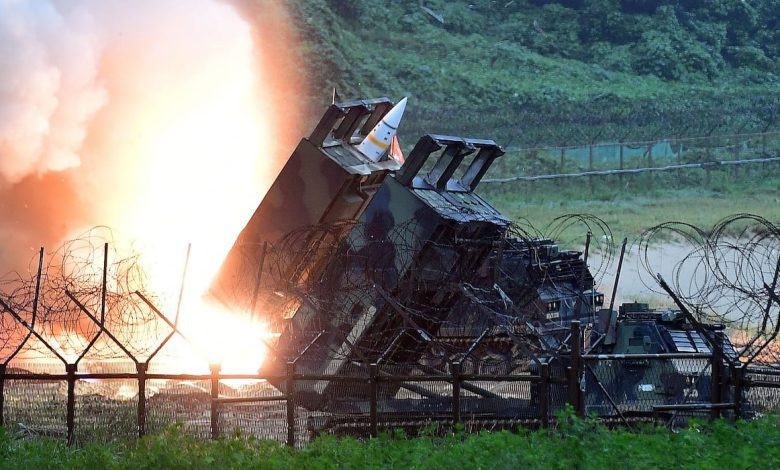
VIENNA — Lockheed Martin and Rheinmetall have signed an agreement to co-produce the U.S. Army Tactical Missile System (ATACMS) at Rheinmetall’s Unterlüß site in northern Germany, marking the first time the ballistic missile is set to be manufactured outside the United States.
The memorandum of understanding, announced at the NATO Summit Defense Industry Forum in Ankara, was backed by both the U.S. and German governments and is described by the companies as a step toward a joint venture that would create a European “centre of excellence” for manufacturing, integrating and distributing ATACMS to NATO and allied forces.
Rheinmetall CEO Armin Papperger called Unterlüß’s selection a way to strengthen “the industrial base in Germany for modern defense systems,” while Lockheed Martin’s European chief, Dennis Goege, framed the deal as pairing “proven U.S. technology with European manufacturing strength.”
Unterlüß, a 125-year-old Rheinmetall site employing roughly 4,000 people, has been expanding rapidly: a new artillery-ammunition plant opened last year, and a rocket-motor factory now nearing completion is slated to begin producing motors and guided-missile components as early as 2027. That timeline tracks with earlier statements from Papperger, who in May said full missile production would start in 2027 and scale up through 2028 and 2029 to meet what Rheinmetall estimates is annual European and Ukrainian demand of 600 to 800 ATACMS units.
The move addresses a real bottleneck. Lockheed Martin has been winding down ATACMS output at its Camden, Arkansas, plant as it prioritizes the newer Precision Strike Missile, which is set to eventually replace ATACMS in the U.S. arsenal − even as European and Ukrainian demand for the older missile remains high.
Once implemented, the site in Germany will be the first non-American location to produce ATACMS missiles. Lockheed says it will keep running the Arkansas line until the transition to European production is complete.
The Rheinmetall-Lockheed partnership has been building for over a year: the two firms first signed a missile-cooperation MOU in 2024, expanded it in April 2025 to cover a broader “Center of Competence” for missiles and guided weapons, and by last August were already discussing ATACMS and Hellfire specifically for Unterlüß. Whether Tuesday’s MOU translates into an approved joint venture still depends on U.S. government sign-off, since ATACMS technology transfer requires Washington’s consent.
Linus Höller is Defense News’ Europe correspondent and OSINT investigator. He reports on the arms deals, sanctions, and geopolitics shaping Europe and the world. He holds master’s degrees in WMD nonproliferation, terrorism studies, and international relations, and works in four languages: English, German, Russian, and Spanish.