The U.S. Air Force has cleared its first Collaborative Combat Aircraft to enter production, awarding contracts to General Atomics Aeronautical Systems and Anduril Industries. Six companies will compete on the autonomous software that will fly them.
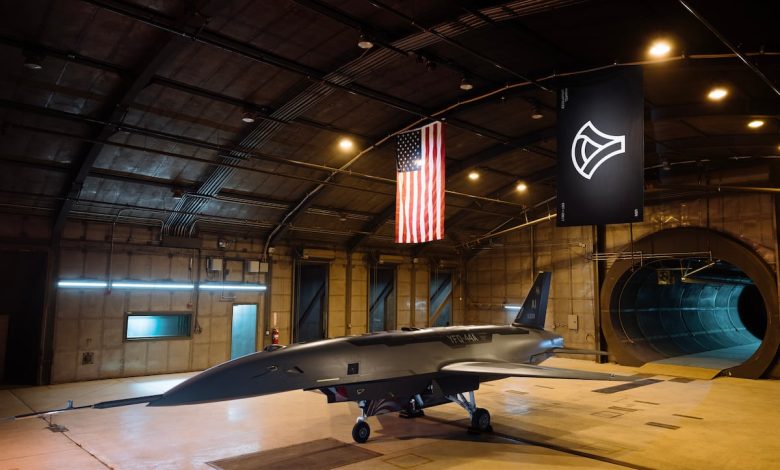
The Air Force made the announcement Wednesday, saying it reached the decision four months ahead of schedule. The contracts went to General Atomics for its FQ-42A and Anduril for its FQ-44A, as part of CCA Increment 1.
The two aircraft were previously designated the YFQ-42A and YFQ-44A. Dropping the Y prefix signals their shift from prototype to production.
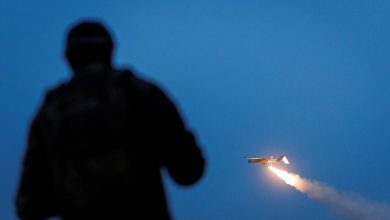
Often referred to as “loyal wingmen,” CCA are jet-powered, semi-autonomous unmanned aircraft built to fly alongside crewed fighters such as the F-35 and the planned F-47, extending their sensors and weapons while taking on risk that would otherwise fall to pilots.
“Collaborative Combat Aircraft change how we project power and generate mass in highly contested environments,” Air Force Chief of Staff Gen. Ken Wilsbach said in the release. “Delivering this capability to our warfighters faster ensures our forces maintain the tactical edge required to deter and, if necessary, defeat any adversary.”
The Air Force is committing to a large CCA fleet, though it won’t happen all at once. Air Force Secretary Troy Meink said the contracts reaffirm the service’s confidence that it can buy more than 150 combat-capable CCA by the end of the decade, well below the program’s long-term goal of roughly 1,000.
“By moving fast from competitive selection into full-scale manufacturing, we position ourselves to field highly credible and combat-ready semi-autonomous systems to stay ahead of the pacing challenge,” Meink said in the announcement.
Separately, the Air Force opened a competition for the software that will operate the CCA.
“Mission autonomy is the cornerstone of the CCA concept, and leveraging a competitive, multi-vendor environment ensures we capture the latest technology,” Meink said, noting that this approach capitalizes on current technology while leaving room for future breakthroughs.
Six companies won spots in a six-year pool: Anduril, General Atomics, Lockheed Martin, Northrop Grumman, RTX Collins Aerospace and Shield AI.
From that group, the service picked three to begin work on autonomous software right away. Anduril, RTX Collins Aerospace and Shield AI will take part in the first of two six-month rounds of head-to-head competition.
The service said those three were chosen based on their ability to meet the program’s schedule and cost demands. The Air Force plans to name a single primary software provider for Increment 1 by summer 2027.
Using an approach the Air Force calls first-of-its-kind, the service will pay the full licensing fee only if a vendor “provides a combat capability aligned with warfighter needs and feedback.”
This arrangement affords the Air Force the ability to acquire and implement state-of-the-art technology that is continually evolving.
Despite three companies getting first crack at developing the autonomy software, the Air Force may award software licenses to any of the six vendors within the pool at any point over the next six years.
Providing the foundation for this strategy is the government-owned Autonomy Government Reference Architecture, a modular, open-systems approach that enables the Air Force to move software between aircraft and avoid being locked into a single vendor.
The service said in February that it had integrated government-owned autonomous software into both prototypes using that architecture, which it called proof the software could move across vendors and platforms.
The contracts come on the heels of the service’s fiscal 2027 budget request, which marked the first time it asked Congress for money to buy CCA rather than just develop them.
The service declined to disclose the value of the contracts or how many of each aircraft the two companies will build.
Michael Scanlon is a defense journalist covering air and space warfare. A former U.S. Air Force A-10 crew chief, he has supported land and sea programs for the U.S. Army, Navy, Marine Corps and Coast Guard.