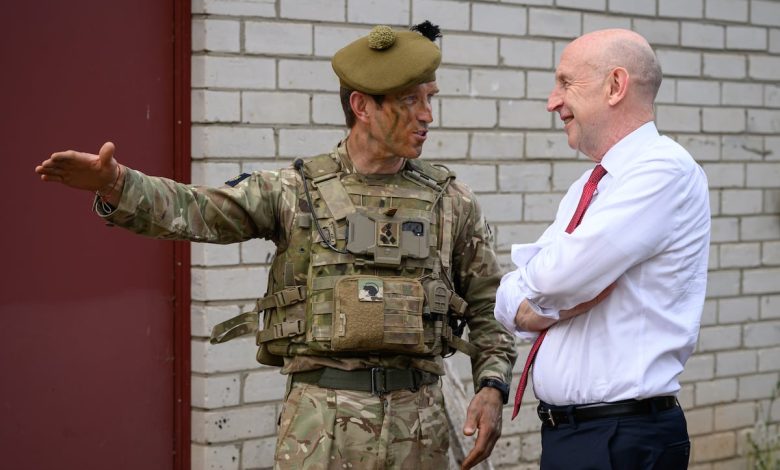
ROME — British Defense Secretary John Healey resigned on Thursday, accusing U.K. prime minister Keir Starmer of skimping on defense spending at a time of “rising threats.”
Healey took aim at the U.K. government’s long-delayed Defence Investment Plan (DIP), designed to shore up Britain’s military readiness but held up for months as government departments tussle over funding.
In his resignation letter to Starmer, which Healey posted on Thursday, he said he had now seen the defense funding plan, and it “falls well short of what is required.”
He added, ”You have been unable, and the Treasury has been unwilling, to commit the resources that the nation needs to defend the country at this time of rising threats.”
He told the prime minister, “After explaining to you that I would not be able to accept a DIP settlement that does not give our forces the resources they need, I am now left with no other option than to submit my resignation as your defense secretary.”
Healey said that the spending plan agreed by the British Treasury would push defense spending to 2.68% of GDP by 2030, not enough considering that it would already hit 2.6% next year.
He admitted more funding would follow after 2030 but complained that the “imperative to speed up readiness to fight is in the first two years,” given the current threat posed by Russia.
“Without a DIP that meets the moment in this way, I am being forced to make decisions that would reduce the readiness of our forces and increase the risk to personnel on operations, and could make the country less safe,” he wrote.
Healey’s resignation could prove a last straw for Starmer’s Labour government, which has been shaken by internal dissent and calls on the prime minister to resign.
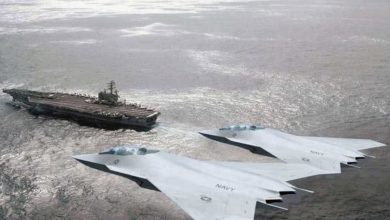
As the U.K. has dragged its heels on finalizing the DIP – with promises to publish it before the NATO summit in Turkey next month – doubt has been cast on Britain’s commitment to the sixth generation GCAP fighter program on which it is teamed with Japan and Italy. Last month, the UK signed a stopgap contract to keep work going on the program for three months. Now partners will be keen to see what money is available in the DIP to keep GCAP funded beyond that.
Healey’s resignation drew sympathy on Thursday from Italy’s defense minister Guido Crosetto, who is also battling threatened cuts to defense spending in Italy amid rising energy costs caused by the US-Iran conflict.
“I completely understand your reflections and the reasons that led you to make this choice,” Crosetto posted in response Healey’s resignation.
“It is a choice that cannot leave any of us, your colleagues, grappling with the very same challenges, indifferent.
“I find myself in agreement with almost everything you have written, and the thoughts you have made public today have often been my own as well,” he said.
Tom Kington is the Italy correspondent for Defense News.