This article was originally published by Tyler Durden at ZeroHedge.
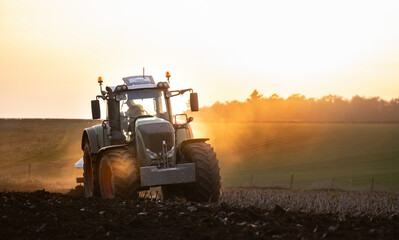
The Trump administration appears to be trying to inject new optimism across the nation’s farm belt following the China meeting last month, during which Beijing committed to making billions of dollars of new purchases of U.S. agricultural goods. The White House’s latest move is to reduce tariffs on tractors and combines, a policy shift aimed at easing cost pressures on farmers already squeezed by diesel, fertilizer, and machinery costs.
Late Monday, President Trump signed a proclamation slashing tariffs on imported agricultural equipment, including combines and harvesters, from 25% to 15% to lower costs for US farmers and manufacturers.
More color from the White House:
- The Proclamation adjusts the tariffs on agricultural equipment, like combines and harvesters, as well as certain other equipment, from 25% to 15%.
- The Proclamation also expands the existing category of industrial equipment subject to a 15% tariff to include mobile industrial equipment, like bulldozers and forklifts, when imported from trade deal countries that are entitled to such treatment.
- The Proclamation encourages foreign companies to use more U.S. steel and aluminum by allowing them to qualify for a 10% duty rate, if their capital equipment include at least 85% U.S. melted and poured or smelted and cast steel or aluminum by weight.
- These tariff changes are temporary, lasting until December 31, 2027, to spur near–term investments that will rebuild the Nation’s industrial base.
The move is a clear attempt by the Trump administration to spur optimism across the nation’s farm belt following China’s commitments last month to purchase $17 billion annually in additional U.S. agricultural goods.
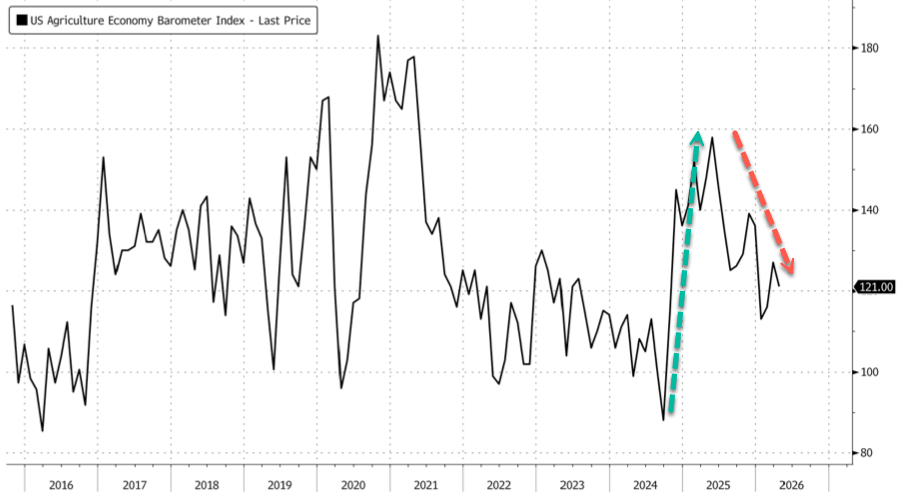
The latest reading of the US ag economy via the Purdue University/CME Group Ag Economy Barometer has been fading from a summer 2025 peak as trade wars and, now, the Gulf-related energy shock hurt farmers’ incomes.
Trump’s directive sent shares of the Japanese agricultural and industrial machinery company Kubota up 5% in Tokyo trading.
Efforts to boost farmer sentiment come ahead of the midterm election cycle, which is gearing up and is only 154 days away.