When Plans Fall Apart
Whether it’s a known threat, such as a natural disaster or a failed crop season or a Black Swan (an event that you failed to anticipate that harms you), resilience and antifragility are built through adaptation and trust in the process.
It is a fact that things don’t always go as planned. A Yiddish proverb says, “Man plans, God laughs.” Similarly, a thesis by Helmuth von Mulke the Elder is summed up as, “No plan survives first contact with the enemy.” In reading books like The Black Swan: The Impact of the Highly Improbable and Antifragile: Things that Gain from Disorder by Nassim Nicholas Taleb, I came away understanding that man is really lousy at predicting the future.
I didn’t always understand this concept, but when I finally got it, it was a light bulb moment, and now it definitely affects how I plan and prepare. I still plan, but I understand the importance of faith, flexibility, and staying the course. It also affects the way that I plan.
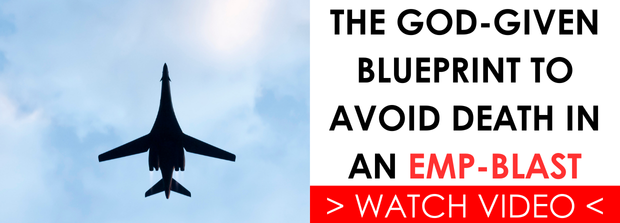
Now I plan for things to not go according to plan, for Murphy to show up, and for unknowns. I still plan for known threats, but now I accept that I cannot predict the future, that things will go wrong, and that there will be Black Swans. So, now my plans are much more adaptable, and I pay more attention to detail on my “plan B”, and “plan C”.
Fortunately, if you plan for the worst-case scenario, you’re already prepared for most other things.
Understanding antifragility has also affected my planning. When survivalists talk about “thrival”, the word for that concept is antifragility. It is more than resilience, which is not being harmed by negative stimulus, it implies that you actually grow stronger in response to it.
Taleb points out that there aren’t any examples of antifragility in manmade systems. We engineer fragility into our designs and the best we typically achieve is resilience, but examples of antifragile systems abound in nature. An example is how our bodies respond to resistance training by increasing muscle tissue and bone density.
As a result, my goals have changed. I no longer think, “How am I going to survive this?” I think, “How can I become stronger, more patient, or better in some way in response to this?”
Faith
Faith and values keep you grounded. When everything is chaotic and changing, it helps to believe that God has a plan for you, and to be standing on a foundation that never changes.
People of faith, one of my uncle’s calls us “true believers”, have an advantage in survival situations. Believing that God has a plan for you and that he won’t put you to a test unless he has prepared a way for you to accomplish it, gives you an advantage over people who do not share your belief.
I have studied thousands of survival ordeals where people ended up losing their lives, and the loss of the physiological battle often occurs shortly after the loss of the psychological struggle. Having faith is an advantage in terms of “the will to survive.”
Values also play an important role. A mentor taught me that people often center their lives on things that change, like titles, money, material possessions or other people to their detriment. If your sense of self worth comes from your job title, you are going to take a hit if you lose it. Money and material possessions can be stolen, lost in a fire or other disaster, or become worthless due to effects like hyperinflation. If your happiness is based on money or possessions, it can be lost in the blink of an eye. If your happiness or self-worth is based on another person, you empower them to dictate your emotions and your life can be sent into a tailspin if they change, leave you or die.
Unlike these centers, correct principles are timeless, unchanging and universally accepted. If your sense of self-worth comes from your own integrity, it is determined by your ability to make and keep commitments. Correct principle can’t be stolen or burn up in a fire, and they won’t leave you or die.
Your principle center acts as a moral compass. It can guide you. Your faith gives you something stable to hold onto when external circumstances spiral beyond your control. Without a strong set of values, it’s easy to get lost in the turbulence and make decisions you’ll regret later. (Covey, 1989)
The parable of the wise and foolish builders demonstrates the importance of building on a solid foundation. Paraphrased, it said the foolish man built his house on the sand, and the wise man dug deep and built the foundation of his home on bedrock. When the storms, wind and rain came, the foolish man’s house fell, but the wise man’s house withstood the storm.
When things go sideways, it’s helpful to have been living a life that is principle centered. Your principle center can support you and act as a moral compass to guide you as you make decisions and adapt to volatility and change.
Flexibility
While faith provides the anchor, flexibility enables you to handle the unexpected turns that come your way.
I think that if any reasonable person studies survival long enough, they will eventually conclude that it is not the strongest or even the smartest organism that survives, but the most adaptable.
Things don’t always work out that way you plan or anticipate, but that’s OK. Failure is an essential part of how we learn. We need the small failures. We just have to avoid the big life-ending mistakes, build flexibility into our plans, learn to recognize when they aren’t working, and be ready to pivot and adapt.
This concept is what sent me down the rabbit hole of applying modularity to layered survival kits and stockpiles because the strengths of modularity are flexibility, versatility and adaptability. I needed to be able to quickly add or remove components to trade capability and sustainment time for mobility and maneuverability or vice versa because I couldn’t possibly know ahead of time whether I will need to shelter in place or bugout to save my family, or even what threat we will face next.
Because I planned my equipment to be layered and modular, I can quickly adapt it to the situation at hand. If I am in the middle of a bugout, but I need to transition to escape and evasion, I quickly can doff my sustainment load and cache it, but retain my survival equipment, enabling me to move faster to escape and evade, and possibly return and recover my equipment after things have cooled off.
Before I leave, I can prepare for a specific role, threat or environment by choosing the appropriate turnout bag, load bearing equipment, weapon system, modules, and ensembles.
- Modules can be threat-specific. I may need to shelter in place or bugout, requiring different equipment and a very different plan. I need different equipment to weather a flood than to survive nuclear fallout
- Modules can be role-specific. I may need covert clothing, overt camouflage or a uniform if I am responding in the role of an emergency responder.
- Modules can be environment-specific. I can adapt my load for an urban, rural or wilderness environment, for mountains, desert, or jungle or for hot, wet or extreme cold weather.
- Modules can also be mission-specific. A sniper needs different equipment than a bomb tech or a medic. If I am scavenging firewood I need different tools than if I am scavenging fuel or batteries.
Staying the Course
Staying committed to your principle center and long-term objectives, even when circumstances shift, requires patience, discipline, an unwavering focus on what truly matters, and trust in the process.
This means not abandoning your core values or goals at the first sign of difficulty but rather adjusting your methods while keeping your destination in sight. It means distinguishing between what is fundamental and what is merely tactical, so you can adapt your approach without losing sight of your purpose. It means understanding that setbacks are not failures, but rather course corrections on the path to achieving your objectives.
If you have put in the time and made your plans adaptable by building in flexibility, and you possess the maturity to recognize when they aren’t working, you will be able to seize the opportunity and adapt your plans on the fly.
The combination of faith, flexibility, and staying the course creates a resilient framework for navigating life’s uncertainties and building a life of purpose and meaning. This resilience mindset, rooted in principles rather than circumstances, allows us to face whatever comes with confidence and clarity.
Summary
Faith and values keep you grounded, and how to pivot while still moving toward preparedness goals even when a path closes. Understanding these three pillars—faith, flexibility, and staying the course—creates a resilience that can weather any storm. Resilience and antifragility are not built overnight, but through consistent practice and a commitment to your core values, even in moments of uncertainty.



References
Covey, S. R. (1989). 7 Habits of Highly Effective People. New York: Simon & Schuster.