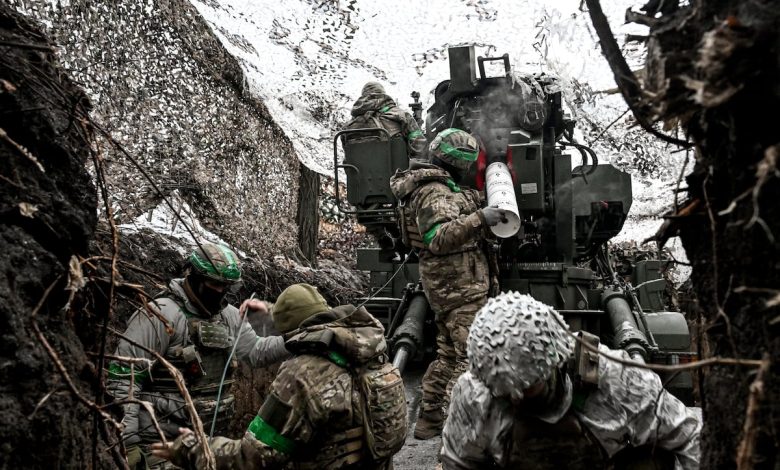
BERLIN — A Swedish defense company is set to build a major 155-millimeter artillery shell factory in northeastern Estonia, a development that would represent the most significant foreign investment in the country’s nascent defense industrial base.
Estonian Defense Minister Hanno Pevkur confirmed last week that an agreement had been reached with an unnamed manufacturer to construct a large-caliber ammunition plant at the Põhja-Kiviõli defense industry park, with the investor committing at least €300 million ($346 million) to the project. The plant will produce short-, medium- and long-range munitions.
According to Estonia’s public broadcaster ERR, the company is Swedish. That narrows the field significantly: The main company in question would likely be BAE Systems’ subfirm Bofors, a storied Swedish artillery and ammunition producer. Bofors was split around the turn of the century between its artillery branch, which ultimately went to BAE, and the missile section, which went to Saab.
When contacted by ERR, BAE Systems spokesperson Matthew Knowles declined to confirm or deny the company’s involvement, saying only that Estonia is an important partner to the company and directing questions to the government.
Pevkur said the company had been promised confidentiality until contracts are formally signed, which is expected to happen in mid-April. He confirmed the firm is neither South Korea’s Hanwha Aerospace nor the U.S. giant Lockheed Martin.
The planned factory at Põhja-Kiviõli is one piece of a broader and rapidly expanding Estonian defense industry effort. The Ermistu defense industry park in Pärnumaa is already set to host four companies − including U.K.-linked Odin Defence and Estonian explosives maker Nitrotol − with production expected to begin as early as 2027. Separately, Tallinn has set up a state-owned company, Hexest AS, to produce RDX explosives, a key component in 155mm shell filling, with that facility expected to be in action by 2028.
The push is a consequence of both Russia’s war in Ukraine and the persistent ammunition shortages that have exposed the risks of over-reliance on a handful of producers. Estonia, which borders Russia and has among the highest defense spending as a share of GDP in NATO, is betting that sovereign production capacity is worth the price tag.
Linus Höller is Defense News’ Europe correspondent and OSINT investigator. He reports on the arms deals, sanctions, and geopolitics shaping Europe and the world. He holds master’s degrees in WMD nonproliferation, terrorism studies, and international relations, and works in four languages: English, German, Russian, and Spanish.