‘Ukrainian housewives’ and Skyranger delays – German defense poster child Rheinmetall is in hot water

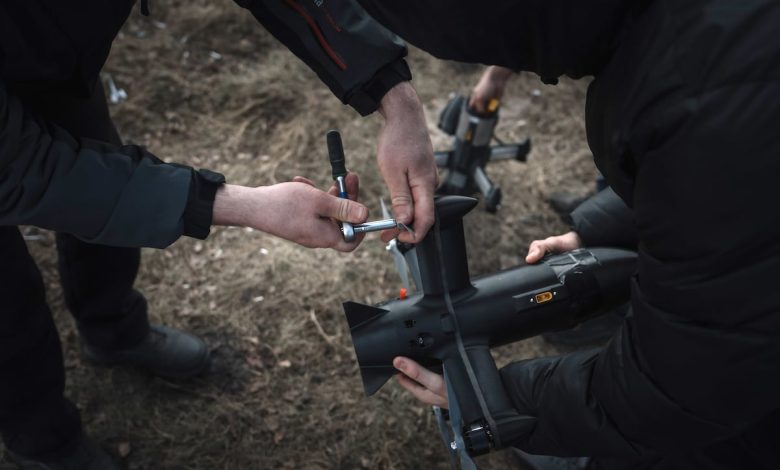
VIENNA — The chief executive of Rheinmetall, Europe’s highest-valued defense company, continues to face criticism after dismissing Ukraine’s drone industry as the work of “housewives” with “3D printers in their kitchens” − comments his own company quickly walked back. Now, German media report the Bundeswehr’s flagship Rheinmetall counter-drone system is running at least 16 months behind schedule, adding further troubles for the defense giant.
Armin Papperger made the remarks on Ukraine in an interview with The Atlantic, published March 27, conducted at Rheinmetall’s Unterlüß factory. Discussing Ukrainian drone manufacturers − including companies such as Fire Point and Skyfall, named by the interviewer − Papperger said the producers were “Ukrainian housewives” and described the work as “playing with Lego.”
“This is not the technology of Lockheed Martin, General Dynamics or Rheinmetall,” he said.
The backlash was swift and came from multiple directions. Within 48 hours, Rheinmetall’s own corporate communications published a statement saying the company “deeply respects the enormous efforts of the Ukrainian people in self-defense against Russian aggression” and called the Ukrainian “innovative strength and fighting spirit” a “source of inspiration.”
Papperger has been the company’s CEO since 2013.
Rheinmetall runs multiple joint ventures in Ukraine and has staked much of its rearmament narrative on being a trusted partner of Kyiv.
The Ukrainian drone industry, while heavily reliant on Chinese components, has developed battlefield capabilities, from one-way attack FPVs to long-range strike drones, that have demonstrably shaped the course of the war in ways no Western prime contractor has replicated at comparable speed or cost.
In October, Papperger had already called into question the importance of drones in the war in Ukraine, telling Handelsblatt, a German business publication, that modern wars are still fought primarily with tanks and missiles. “There are a lot of these narratives circulating right now that claim future wars will be fought exclusively with drones. I think that’s nonsense,” he was quoted as saying.
The timing of his latest remarks collided with unflattering news on Rheinmetall’s home turf. According to German news magazine Stern, reporting on March 31 based on sources in Bundeswehr and parliamentary circles, the Defense Ministry expects delivery of the first serial Skyranger 30 systems with a delay of at least 16 months. That pushes initial deliveries to 2027 at the earliest. The fully developed version would not reach the Bundeswehr until 2029, according to Stern.
Rheinmetall, when asked, said the delay amounts to five months.
The Skyranger 30 is a 30mm air-defense and counter-drone cannon mounted on a Boxer armored vehicle. Stern reported that the delay stems from technical problems integrating key turret components and a failure to incorporate a guided missile originally included in the system’s specification. Under contract terms reviewed by the magazine, Rheinmetall could face a penalty of up to €25 million ($29 million). Neither Rheinmetall nor the Defense Ministry confirmed this number, with the ministry citing trade secrets.
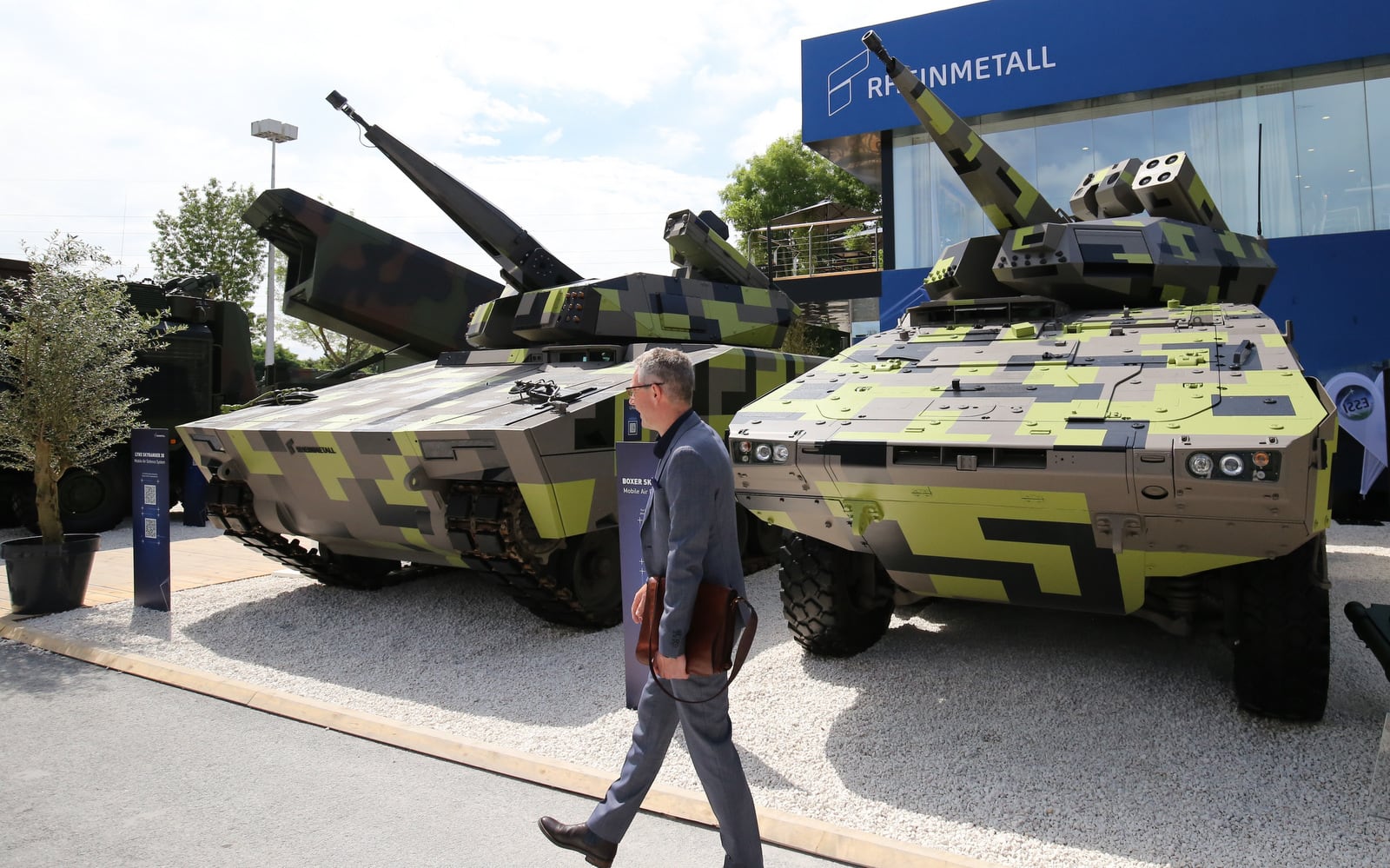
Rheinmetall had proposed an interim solution: a reduced-capability, truck-mounted variant, quoted at approximately €300 million ($348 million). Stern reported that both the ministry and the army rejected the offer after a shooting test deemed unsatisfactory.
Rheinmetall’s stock price remains around 15 times higher than it was before Russia’s full-scale invasion of Ukraine.
The Bundeswehr is urgently rebuilding its short-range air defense capacity, largely gutted after the Cold War, at a moment when the war in Ukraine has made drone threats the most pressing tactical challenge on the European continent. Germany has framed its rearmament as a matter of strategic urgency, and Rheinmetall has been the central industrial beneficiary of that program.
Ukrainian President Volodymyr Zelenskyy called Papperger’s comments “strange” earlier this week, the Associated Press reported.
“If every Ukrainian housewife can really produce drones, then every Ukrainian housewife could also be the CEO of Rheinmetall,” he told reporters via voicemail on WhatsApp, AP reported. “I congratulate our defense-industrial complex on being at such a high level.”
Linus Höller is Defense News’ Europe correspondent and OSINT investigator. He reports on the arms deals, sanctions, and geopolitics shaping Europe and the world. He holds master’s degrees in WMD nonproliferation, terrorism studies, and international relations, and works in four languages: English, German, Russian, and Spanish.