BERLIN — The Trump administration’s push to acquire Greenland has produced a carefully calibrated response from Moscow. An air of restraint in public comments masks more private concern over potential threats to Russian submarine operations, combined with satisfaction at widening cracks in the transatlantic alliance, according to analysts.
Russian officials and policy experts described the crisis as a double-edged sword, validating Moscow’s position on the primacy of power projection over international law, while potentially enabling a major expansion of U.S. military infrastructure in waters critical to Russia’s strategic deterrent.
“One of the most evident conclusions made here in Moscow by many politicians and analysts is that in this emerging world order, which is replacing the old one, might makes right, whether we like it or not,” said Andrey Kortunov, an expert with the Valdai Discussion Club and former director general of the Russian International Affairs Council. “It’s not about norms, but rather about your capabilities to achieve the goals you set for yourself.”
The Greenland episode represents “an entirely different level of realpolitik we haven’t seen arguably since the Suez crisis of 1956,” Kortunov added in an interview, noting that Trump targeted U.S. allies rather than adversaries. In the 50s, the United States intervened against its close allies Britain, France and Israel to stop an invasion of Egypt.
Strategic submarine access at risk
Beyond the geopolitical symbolism, Russian military planners harbor concrete concerns about what an enhanced U.S. presence in Greenland could mean for naval operations in the Atlantic.
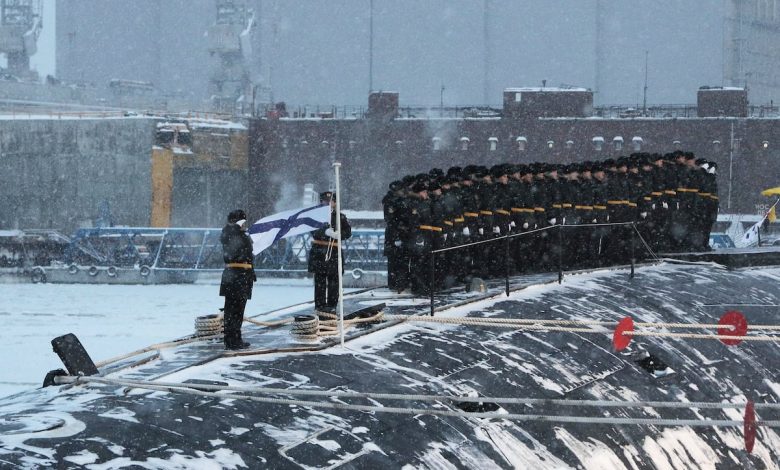
“If the U.S. is really serious about upgrading the military infrastructure in Greenland, that might create certain problems for the Russian navy, especially if we are talking about strategic submarines located in the Barents Sea,” Kortunov said. “They might be denied free access to the North Atlantic Ocean.”
RELATED
Russia’s Northern Fleet operates ballistic missile submarines from bases on the Kola Peninsula, with access to the Atlantic through the Norwegian Sea being a critical element of Moscow’s nuclear deterrent. Expanded U.S. surveillance and anti-submarine warfare capabilities operating from Greenland could complicate those operations.
Vladimir Barbin, Russia’s ambassador to Denmark, warned in January that “attempts to ensure U.S. national security at the expense of the interests of other nations may result in further deterioration of the situation in the Arctic, which Russia will take into account in its military planning.”
Alexander Vorotnikov, an Arctic researcher at Russia’s Presidential Academy, separately warned that U.S. control over Greenland “may negatively affect the development” of Russia’s Northern Sea Route.
Russia has sought to position itself as a key player in Arctic commercial shipping, which is becoming a more viable and cost-effective way to connect Asia to Europe as global warming melts polar ice caps. The Northern Sea Route is one of the primary connections that may become a competitor to traditional routes through the Suez Canal.
Restrained but watchful
Official Russian statements have maintained studied neutrality while emphasizing Moscow’s Arctic interests and criticizing the U.S. for undermining international norms, echoing similar statements by Washington around Russia’s 2022 invasion of Ukraine.
Kremlin spokesperson Dmitry Peskov called Trump’s Greenland push “extraordinary from the perspective of international law” and noted Trump “has indicated international law is not for him.” Russian officials are “monitoring this rather significant development attentively,” Peskov said in early January 2025, a year before the peak of the recent crisis, though he added it was “confined to rhetoric” at the time.
RELATED
A year later, Foreign Minister Sergey Lavrov changed the Russian government’s tone somewhat, asserting that “Greenland is not inherently a part of Denmark” and that Danish governance represents a “remnant of colonial history.” However, Lavrov also pushed back against the Trump administration’s claims of Russian threats to Greenland, which were used by the White House to justify a move on the island, saying “we have no connection to that.”
President Vladimir Putin has largely stayed above the fray, with Kortunov noting that the official line remains: “This is not our problem, it’s a problem between the U.S. and Europe, and it’s up to them to fix it.”
Russian experts generally dismissed Trump administration assertions about Chinese and Russian naval threats to Greenland as pretexts for expansion.
“I think we should take it with a grain of salt. I don’t see any actual evidence that would support this statement,” Kortunov said of the claim from the White House that the seas around Greenland were “swarming” with Russian and Chinese ships. “Greenland is not a part of Russia’s sphere of interest.”
Konstantin Blokhin, an analyst with the Center for Studies of Security Problems at the Russian Academy of Science, characterized Trump’s rhetoric as “probably less about the purchase [of Greenland] than beginning negotiations with Denmark about hammering out better conditions for deployment of American military infrastructure” — calling it “a classic negotiation technique.”
Transatlantic divisions as a strategic win
Seeing deep rifts among the Kremlin’s key foreign adversaries manifest so quickly is sure to have sparked at least some feelings of glee in Moscow. Analysts and commentators see the crisis as validation of Moscow’s long-term strategic bet on Western disunity.
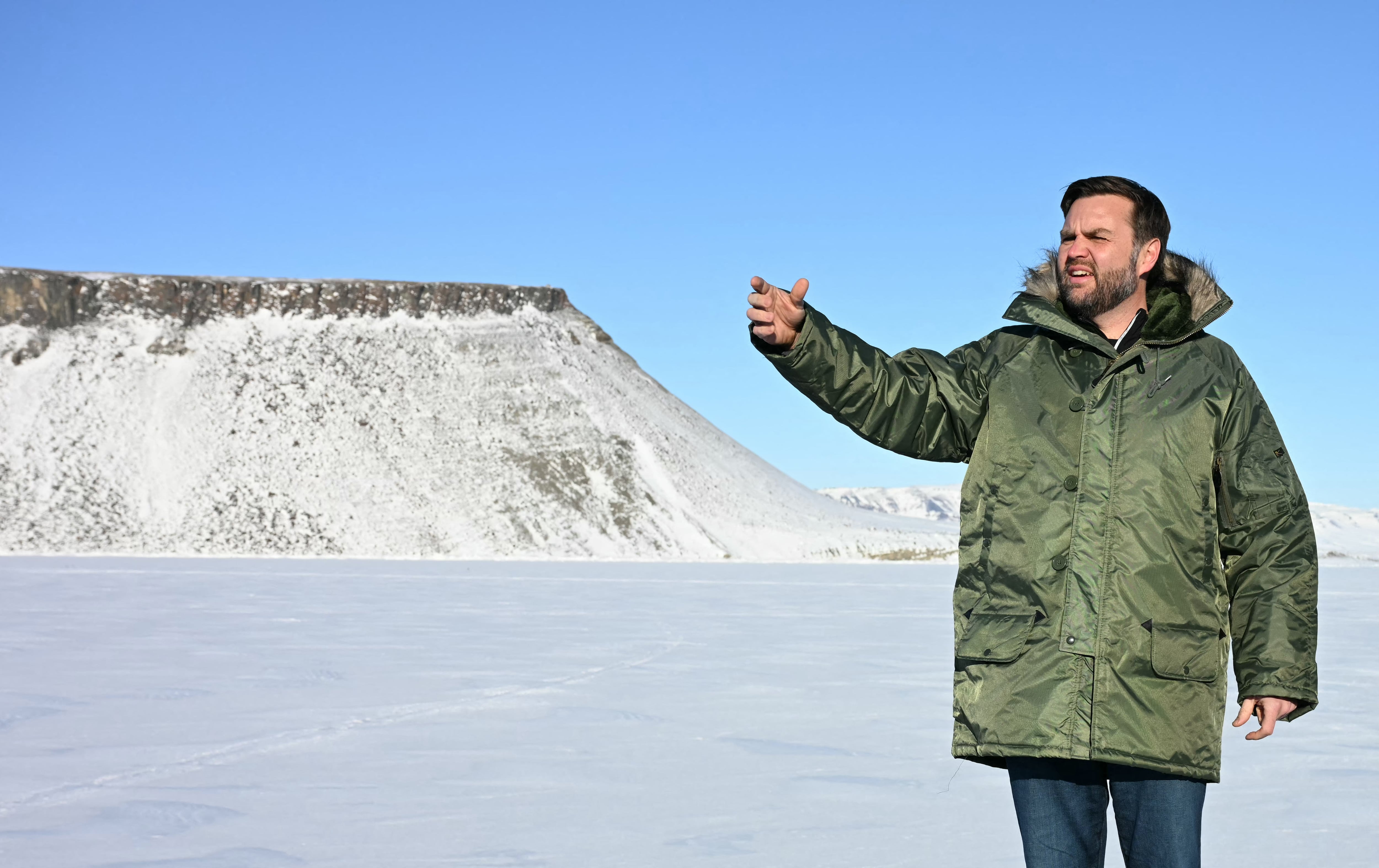
“At least in the situational sense, this conflict can play into the Kremlin’s hands,” Kortunov said. “Many [in Moscow] believe that Trump is crossing certain red lines, but at the same time, if it is a crisis that can weaken NATO, then why should Russia stand for NATO unity?”
Russia’s foreign minister Lavrov himself framed the dispute as posing a “deep crisis for NATO” that raises questions about “the alliance’s preservation as a single military-political bloc.”
The episode also feeds Russian narratives about spheres of influence, with some Moscow voices noting that if the U.S. can invoke the Monroe Doctrine to justify claims over Greenland, Russia’s assertions about its “near abroad” gain legitimacy. Barbin, the Russian ambassador to Denmark, specifically noted that the updated U.S. National Security Strategy “revives the Monroe Doctrine, providing for U.S. responsibility for the situation in the Western Hemisphere.”
However, Kortunov cautioned that the crisis also reveals the limits of the multipolar world that Russian strategists and policy thinkers have long predicted. Europe’s inability to deter potential U.S. actions demonstrates “the EU is not an independent global center of power; it is still too dependent on the United States,” he said. The multipolar world order oft-professed in Russian academic papers is still in the making, the takeaway is.
Indeed, a common line in many Russian policy papers is that a geopolitically independent Europe may find that many of its interests align more closely with Russia than with the United States. Both sides have things to offer that the other side needs, and the EU was Russia’s largest trading partner before imposition of sanctions in the aftermath of the 2022 invasion of Ukraine.
Arctic militarization likely to intensify
While official responses downplayed the significance of the Greenland spat to Moscow’s interests, the episode may have accelerated Russian military investments in the Arctic.
“I can imagine that this crisis might be yet another motivation to invest heavier in the Arctic region of the Russian Federation just to secure Russia against various uncertainties and potential problems looming on the horizon,” Kortunov said. “There are people who suggested that in a couple of years from now the Arctic strategy of the U.S. might constitute a formidable challenge to the Russian Federation.”
Ilya Kravchenko, director of the Russian Institute of Strategic Studies, said that “it is now a pervasive opinion in Washington that the Arctic region should be developed much more intensively to hinder Russia’s advancements.”
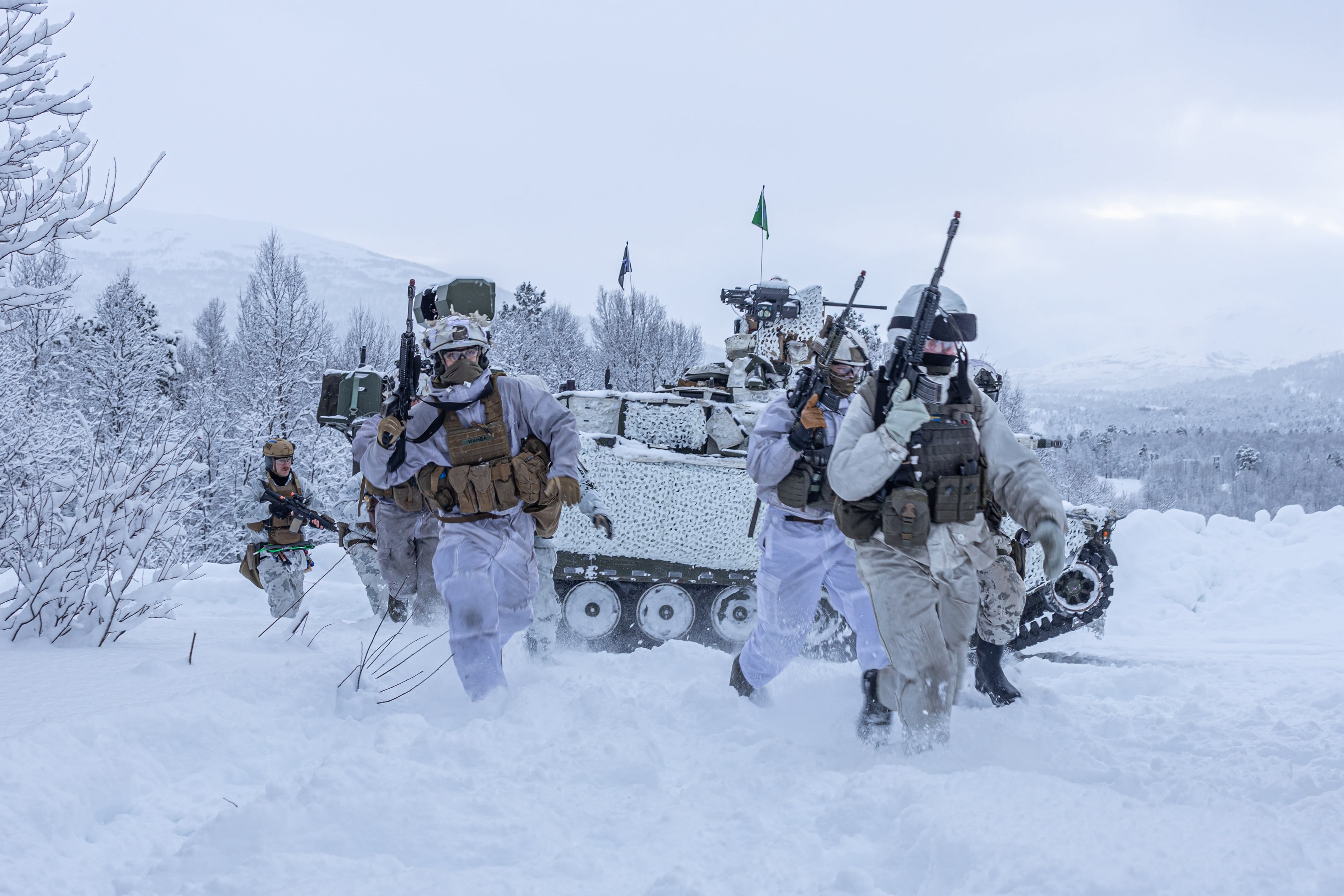
Russia has already invested heavily in Arctic military infrastructure over the past decade, reopening Soviet-era bases and deploying new air-defense and coastal-defense systems across its northern coastline. Russia’s Arctic coastline constitutes more than 40 percent of the global total, and the region hosts more residents than all other Arctic nations combined. Several major Russian cities lie within the Arctic Circle.
Northern Sea Route tensions
Beyond immediate military concerns, Russian strategists worry about future conflicts over Arctic maritime routes as climate change opens new passages.
“There is a controversy about the Northern Sea Route, because Russia claims ownership of large areas of the Arctic Ocean and considers the Northern Sea Route as legally Russia’s domestic [transportation link],” Kortunov said. “With the Arctic ice melting, with the U.S. settled in Greenland, there might be a contradiction between U.S. intentions to find alternative routes and the Russian claims on these parts of the ocean.”
Moscow has long insisted the Northern Sea Route — running along Russia’s Arctic coast from the Barents Sea to the Bering Strait — falls under Russian jurisdiction, requiring foreign vessels to seek permission and pay fees for passage. Western nations contest this interpretation, viewing much of the route as international waters.
Mixed views on cooperation
Despite the tensions, some Russian experts also see potential for cooperation if the U.S. becomes more invested in Arctic governance.
“If the U.S. were to become a true Arctic nation with strategic interests in this part of the world, that might constitute certain opportunities for cooperation between Moscow and Washington,” Kortunov said, citing resource exploration, climate change management and indigenous peoples’ issues.
Work of the Arctic Council – a forum for regional stakeholders established in 1996 – has been “at least partially paralyzed” since 2022, he noted. Moscow may view expanded U.S. Arctic engagement as an opening for alternative dialogue channels.
However, that scenario depends on avoiding what Kortunov described as the “danger that the Arctic region will be sucked into this geopolitical competition,” which “would clearly be detrimental to the future of the region.”
Russian officials have called for maintaining Arctic cooperation despite broader geopolitical tensions. Moscow’s ambassador in Oslo in 2025 urged policy “on the basis of international law, the principles of mutual consideration of interests, and inclusive dialogue.”
Russian views on Trump remain divided
The Greenland crisis has not produced consensus in Moscow about Trump’s presidency, with commentators split between those who see him as a potential partner and those who view him as an unpredictable threat.
“There are many Trump fans who believe Trump is a great guy who was able to stand up against neoliberalism, and basically he defends traditional values and therefore he is a natural ally,” Kortunov said. “And there is another group of people who are very critical of Trump — who see him as a typical Yankee billionaire who goes after independent nations and constitutes a more serious threat to the Russian Federation than, for example, Biden did before.”
This division extends to debates over spheres of influence, with some arguing that major powers have the right to dominate their neighbors, while others advocate a more restrained approach that balances smaller nations’ sovereignty with great-power security concerns, Kortunov explained.
The ultimate Russian verdict on the U.S. president, Kortunov said, “will depend on whether Trump is instrumental in his attempts to end the Russian-Ukrainian conflict. I think that will be the decisive factor in how Moscow ultimately views the Trump presidency.”
Linus Höller is Defense News’ Europe correspondent and OSINT investigator. He reports on the arms deals, sanctions, and geopolitics shaping Europe and the world. He holds a master’s degrees in WMD nonproliferation, terrorism studies, and international relations, and works in four languages: English, German, Russian, and Spanish.