The recent Operation Absolute Resolve captured Venezuelan President Maduro in a stunning display of American military power. Yet weeks later, pro-government forces still control Caracas, and the country remains “uninvestable.”
This gap between tactical brilliance and strategic stalemate reveals the central flaw in the Pentagon’s new National Defense Strategy: America can project overwhelming force anywhere on Earth, but increasingly lacks the sustained presence to turn military victories into enduring outcomes.
The Jan. 24 National Defense Strategy, or NDS for short, confronts a hard reality: the United States cannot simultaneously deter China in the Taiwan Strait, defend the Panama Canal, guarantee European security, and extend nuclear deterrence over South Korea with current force levels.
The Pentagon’s answer is to prioritize homeland defense and Western Hemisphere dominance while maintaining First Island Chain denial and providing “critical but more limited” support to Europe and Korea.
The problem isn’t the diagnosis — it’s that the cure may be worse than the disease.
When priorities collide with physics
The math simply doesn’t work. Taiwan contingency planning alone would consume most available naval and air defense forces before accounting for Western Hemisphere or European commitments. Western Hemisphere defense requires separate force packages: airlift, amphibious platforms, intelligence systems, special operations units, and surface combatants. Current force levels were designed for sustained global commitments, not for simultaneous hemispheric dominance and Indo-Pacific denial while maintaining credible deterrence elsewhere.
The Venezuela operation proves this constraint. America demonstrated it can strike anywhere, but the strategic outcome remains unresolved precisely because the new strategy deprioritizes sustained commitments outside priority theaters.
But the force structure gap is only half the problem. The transition period while allies build capacity creates its own dangers.
The transition window problem
The strategy assumes NATO and South Korea can take “primary responsibility” for regional defense within acceptable timeframes. But Europe faces daunting barriers: aggregate debt at 90% of GDP limits defense spending increases, limited indigenous production of precision munitions and advanced air defense creates capability gaps, and untested casualty tolerance raises questions about political sustainability. This creates a 3-5-year vulnerability window. Europe cannot operate independently while U.S. support is reduced.
South Korea’s challenge is even more acute. The claim that Seoul can take “primary responsibility for deterring North Korea” with “critical but more limited U.S. support” assumes conventional superiority can replace a nuclear guarantee. It cannot. North Korea’s growing arsenal creates advantages in any escalation scenario that conventional forces cannot counter. “Critical but more limited” support undermines confidence in the fundamental question: Would Washington trade Los Angeles for Seoul? This ambiguity could prompt Seoul to reconsider its nuclear stance, triggering exactly the proliferation cascade nonproliferation policy seeks to prevent.
When strategy becomes personal
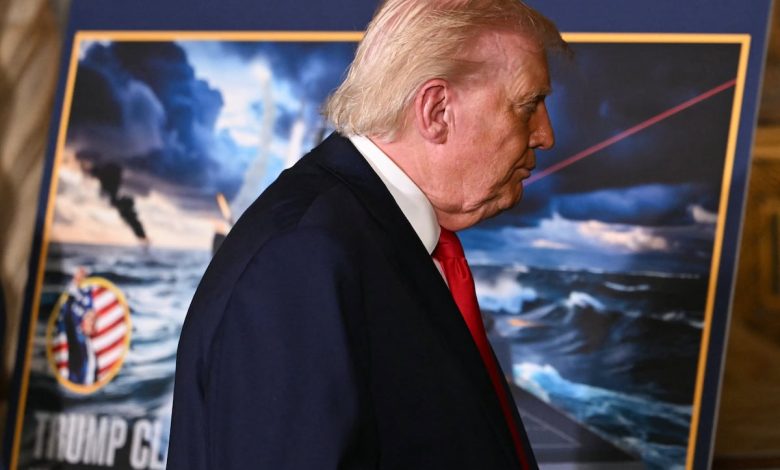
Perhaps most troubling, the NDS ties its framework explicitly to “President Trump’s vision,” mentioning him 47 times across 24 pages. Enduring strategies frame objectives around persistent national interests, not individual leadership. Containment — articulated in George Kennan’s “Long Telegram” and NSC-68, two pivotal documents of the early Cold War era —survived nearly 50 years across nine administrations because it addressed Soviet threats to American interests.
When strategy becomes synonymous with a single leader, it becomes vulnerable to reversal. If allies and adversaries believe this framework expires in 2029 or 2033, they adjust behavior accordingly: allies delay defense investments awaiting policy reversals; adversaries simply wait us out.
The adversary gets a vote
The strategy’s viability depends on adversaries accommodating American repositioning rather than exploiting vulnerabilities during the transition. History offers little comfort. Britain’s 1937 Imperial Defence White Paper articulated clear priorities, but this didn’t prevent Germany from exploiting the transition period before Allied rearmament.
By designating certain theaters as lower priorities during allied capacity-building, the NDS creates a 3-5-year window for adversaries to test resolve.
The 2026 NDS offers overdue strategic clarity in diagnosing resource constraints. But it fails to show how America bridges the gap between current commitments and future capabilities without creating exploitable vulnerabilities.
The Venezuela operation crystallizes the dilemma: overwhelming tactical capability without strategic staying power. Until the Pentagon shows how it protects allies during the transition — or candidly acknowledges the risks they must accept — this strategy raises more questions than it answers.
Strategy documents set intentions; adversary responses determine outcomes. On current evidence, significant gaps remain.
Richard Berry is a national security strategist who served as senior advisor to six U.S. Indo-Pacific Command and U.S. Special Operations Command (2010-2025).