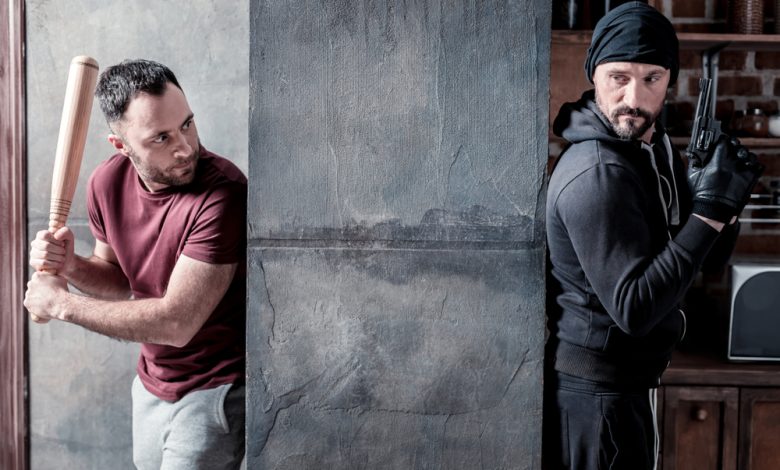
Picture the worst case. You are outnumbered, caught off guard, and your firearm is not in reach. That moment tests preparation, not bravado. You can survive with mindset, movement, layers of early warning, and simple tools that are legal to carry. The goal is not to “win a fight.” The goal is to break contact, protect your people, and live.
Predators look for the easy grab. Head up. Eyes scanning. Phone down. Shoulders back. Walk like you know where you are going. When you enter a store, lot, trailhead, or your own driveway, note exits, cover, and blind corners. If something feels wrong, treat it as real. Change direction. Create space. Get to people and light. Pride does not keep you alive. Distance and decisions do.
You want time. Time comes from layers that detect, deter, and delay.
- Light and motion. Put motion floods on corners, doors, and dark runs. Use a driveway sensor on rural approaches. Inside the house, set door chimes and small battery alarms. Light and sound break surprise and push trespassers to leave.
- Noise lines. Hang simple ankle-high lines with bells or cans at likely approaches to barns, sheds, and coops. They cost almost nothing and work in wind and dark. Place them where family will not snag them. Do not build anything that can injure. Harmful traps are illegal and reckless.
- Signs and optics. Post alarm and camera decals. Use visible cameras or quality decoys with a blinking LED. Add a “Beware of Dog” sign if you own one. Many burglars skip a place that looks watched.
- Doors and windows. Reinforce strike plates and jambs. Use deep-throw deadbolts. Add door braces for sleep hours. Plant thorny shrubs beneath ground-level windows. Small hassles buy minutes.
- Dogs. A dog barks at unusual movement and strangers. You gain a living alarm that cannot be hacked and that forces intruders to make noise.
Urban homes benefit from subtle layers that do not annoy neighbors. Rural homesteads benefit from range. Use long-reach driveway beams, multiple sensors along fence lines, and clearly marked gates. Assume help takes time. Redundancy is your friend.
If contact happens, movement keeps you alive.
- Do not get surrounded. “Get off the X” at once. Angle toward a doorway, hall, stair, fence gap, vehicle line, hedge, or any funnel that forces attackers to come single file.
- Use cover and terrain. Put mass between you and the threat. Engine blocks, trees, masonry corners, big furniture. On your land, pull them toward uneven ground, narrow gates, or mud that slows feet. In a house, fight from a hall or stair where only one can reach you.
- Stay mobile. Sidestep. Burst. Pivot. Make them adjust. Movement breaks timing and ruins the plan they brought.
- Wall at your back. If pushed into a wall, accept it. Now no one is behind you. Pick the weak link and drive through that gap.
You are not trying to finish anyone. You are trying to make space and leave.
You win the seconds you need with tools you can lawfully carry and deploy fast.
- Pepper spray. A quality OC spray is top tier non-lethal defense. Keep one in the car door, one by the bed, and one clipped in a pocket when you walk. Practice sweeping a short burst to the eyes from 6 to 10 feet. Replace expired canisters. Know your state rules on size and carry.
- Flashlight. A metal light with real output belongs on every nightstand and in every glove box. A sudden blast of 1,000 lumens to the eyes buys seconds. The body of the light serves as an impact tool. Strike hands, knees, collarbone, or temple if you must.
- Cane or walking stick. A stout cane is legal almost everywhere. It gives reach, leverage, and control. A simple jab to face or sternum, or a hard crack to knee or hand, ends a rush fast. Keep one by the main door even if you do not need it to walk.
- Everyday objects. Use what is there. Fire extinguisher to the face followed by a blast. Cast-iron skillet. Chair shoved into a charge. Keys, pens, small pry bars, belt with a heavy buckle. In the yard, gravel or sand to the eyes creates an opening. Do not carry items that suggest intent to brawl. Use innocent objects with real utility.
Train what you carry. Practice drawing spray, lighting and strobing with the flashlight, and swinging a cane safely. Under stress, you default to reps, not wishes.
Priorities are simple: break contact, live, call it in.
- Escape first. If there is a line to safety, take it. Run to light, people, a locked door, or your vehicle. In the house, fall back to a pre-chosen safe room, lock, barricade, and call 911.
- Create chaos. Yell “Fire.” Hit the car alarm. Throw objects. Kick a trash can behind you to slow pursuit. Strobe light in faces. Blast pepper spray across the lead attacker and cut out.
- Hit high value. If you must hit, hit once, hard, to eyes, throat, groin, knee, or fingers. Do not clinch with one while the others close. Strike and move.
- Use bodies as barriers. Step so a sprayed or stumbling attacker blocks his partners for a second. That second is your exit.
- Use terrain. Choke points favor you. Bottleneck them in a hall or between cars. Outside, cut to terrain you know.
- Mindset. Decide now that you will do what it takes to go home. Predators hunt hesitation. Show resolve. Then leave the instant you can. Do not chase. Call authorities and make the report while details are sharp.
Defense is a family sport.
- Write a simple plan. One page. Night routine. Alarm checks. Who grabs kids. Who calls 911. Safe room location. Code words for “hide” and “come.”
- Drill it. Two short drills a year. One power-out drill at night. One daylight “intruder” drill to the safe room. Keep it calm and brief.
- Stage tools. Light, phone, spray, tourniquet, and small first aid kit in the safe room and by the master bed. Label shelves. Keep shoes at the bed for broken glass.
- Talk law in plain words. Know your state rules on force, Castle Doctrine, duty to retreat, and when to stop. Harmful traps are illegal everywhere. Lethal force belongs only in clear, imminent threat to life.
- Strengthen neighbors. Join or start a block or road watch. Share camera coverage. Trade phone numbers. The fastest help often lives next door.
Distance changes timelines. You may be your own first and second responder.
- Use multiple driveway and pasture sensors to build a clock of approach.
- Light the perimeter and the lane.
- Keep a simple radio plan with near neighbors.
- Stage a charged power bank with your phone and radio.
- Lock barns, fuel tanks, and tool sheds.
- Train dog alerts. Reward barks at the right times so you read the difference between a deer and a truck at midnight.
Noise and proximity change tactics.
- Favor quiet layers like chimes, cameras, and strong doors over outdoor sirens that trigger complaints.
- Add a wedge brace behind the main door at night.
- Park under light. Back into spaces for fast exits.
- Walk with a purpose. Stick to sight lines and avoid blind pinch points like hedged paths and unlit stairwells.
As soon as you reach safety, lock doors and call 911. Speak clearly. “Someone tried to attack me. I used pepper spray to stop the attack and escaped. I am at [address]. I need police and medical.” Holster or set down any tool. Meet responders empty-handed and visible. Give the short facts, then ask for medical if you need it. After you make your statement, ask to speak with counsel before extended interviews.
A gun is one tool. Survival rests on mindset, movement, layers, and lawful force that buys seconds to escape. Build the layers now. Walk your property and routes. Stage lights, alarms, and signs. Keep a real flashlight and OC spray where you can reach them in the dark. Practice three movements: sidestep and angle to a funnel, blast of light or spray to the face, and a burst to safety.
Prepare the house. Prepare the mind. Act with speed and control. You can defend yourself and your family without a firearm when the worst day arrives. Stay alert. Keep it legal. Live to fight only the fights that matter.